BIRDING THE LUNE ESTUARY THE FOREST OF BOWLAND AND BEYOND.......................................................................COMMON TERN CONDER POOL PETE WOODRUFF
Showing posts with label Vagrant Emperor. Show all posts

Sunday, 30 October 2022

Finch It!

My Bowland records made another forward surge this week when I found 3 Bullfinch, seen as two male in the trees at the car park on Rigg Lane, and two hours later, one in flight towards Cragg Wood. These birds represent 7 sightings of 23 Bullfinch in Bowland, with 16 at Birk Bank - eight of which were Northern Bullfinch - on three dates in Nov/Dec 2004, a pair at Tower Lodge Nov 2022, a pair at Rushy Lee Feb 2022, and 3 at Birk Bank/Cragg Wood Oct 2022.

The Bullfinch is regarded as a partial migratory bird, those that migrate make short to medium distance movements. So are these Bowland birds wintering, or do they actually breed in Bowland. I reckon they don't breed, but if they do, having never seen a Bullfinch in Bowland during the summer months, I've yet to discover where. 

Other sightings included Siskin seen in mini groups flighty around Rigg Lane, woefully small numbers of no more than 6 Fieldfare all on the wing, and 8 Red Grouse.

No apologies, but the following section of this post starts with my third video footage of 2 Ruff at Conder Green, the species being well up the list of my favourite waders, also in the creeks, a Greenshank.

The purpose of this outing was to get to Plover Scar for the high tide, to find it relatively quiet, but with peak counts of 120 Oystercatcher, 95 Turnstone, and 42 Dunlin

Twite Cockersand. Martin Jump.

A count of 28 Twite were flighty and spent a little time on the scar. There was an obvious presence of Skylark in and over the stubble field by Lighthouse Cottage, with 16 >south. A male Reed Bunting seen, and a Kestrel hovering over the marsh off the Caravan Park before diving to take out a small rodent.

In the field south of Clarkson's Farm, I counted 32 Whooper Swan, though they were in a dip in the field and certainly a few more with heads down as they fed.

Thanks to Martin Jump for his Oystercatcher header and Twite at Plover Scar.

THE DRAGONFLY.

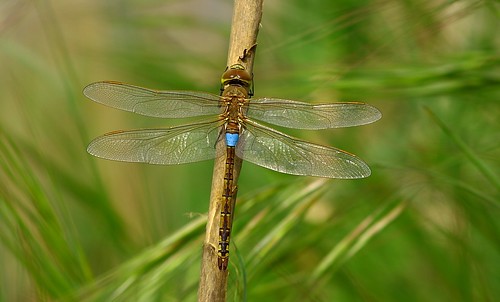
Vagrant Emperor Heysham Harbour 25 October. Kevin Eaves.

When Kevin visited Heysham Harbour last week on 25 October, he must surely have had what he might find in the back of his mind. What Kevin did find could only have made him amazed and elated in equal measure when he came across his second Vagrant Emperor at Heysham 15 days earlier than his first seen on 9 November 2020.

Thanks to Kevin Eaves for the image of the Vagrant Emperor, and his permission for the must post news of this Lancashire rarity on Birds2blog.

Sunday, 3 October 2021

Report 2020.

The Lancashire Bird Report 2020 was through the letterbox on Thursday. A welcome sight, something of interest for me to read, and a large-format publication with comprehensive accounts of the birds of Lancashire in 2020, accompanied by pages of excellent images by some of the best local wildlife photographers around.

Cover Image Gary Waddington

I soon found myself at page 125, where there was a full page coverage of the Stonechat, listed as 'Fairly common, increasing breeding bird in upland and coastal areas; fairly common passage migrant and winter visitor'.

There was over 1,200 reports of the Stonechat, and the reporting rate on BirdTrack showed it was reported across Lancashire and North Merseyside more frequently in most months than the same month in any of the past 10 years. It was good to read examples like, 'the total West Pennine Moors SSSI population is probably now approaching 100 pairs, the species is now widespread and common in many moorland edge/fringe habitats, in-bye and some moorland habitats'. 

With the exception of two breeding records within the LDBWS area at the Langden and Hareden Valley's, there was no other mention of, passage, territorial, breeding, or wintering records in the LDBWS recording area. Perhaps not too surprising, when you take into account a year of the Covid-19 pandemic, resulting in a drastic reduction of coverage, and my personal inability to cover some of our upland areas, most notably in what was once the stronghold of Clougha/Birk Bank.

My only three Stonechat breeding records in 2020 were....

Hareden 1 June 11 birds including juveniles

Hawthorthwaite 24 July pair with a juvenile

Caton Moor 26 August 18 birds including juveniles

Stonechat Caton Moor 26 August 2020. Pete Woodruff.

This record was seen as an autumn movement by these birds, they were observed in no more than a mile along and around a wall above the length of a track above the wind turbines on Caton Moor.   

Dragonflies in Lancashire 2020.

With my developing interest in Odonata, two records were of note, the recent colonist Keeled Skimmer, failed to move beyond Birk Bank Bog in 2020, and as usual very few reports of the Golden-ringed Dragonfly were received in 2020. 

Note....According to my records, I think these two reports will read differently in 2021!

Vagrant Emperor Heysham Harbour 9 November 2020. Kevin Eaves.

Other interesting reading in the report....The first confirmed sighting of Hairy Dragonfly, was of a male at Lunt Meadows in May 2020. A Lesser Emperor was at Birkdale in August, and 2 Vagrant Emperor, the first of which was a male at Little Thornton on 3 November, and the second six days later at Heysham Harbour on 9 November, was also a male. The Small Red-eyed Damselfly continued to spread in 2020, being found at several new sites around Liverpool, and the Large Red-eyed Damselflies remained confined to their two historic Merseyside sites at Eccleston in St Helens and Aintree. As a continental migrant, the Red-veined Darter is now expected annually in Lancashire, where the majority of records came from the Sefton Coast between Crosby and Ainsdale.

I'm grateful to Dave Bickerton and Steve White for permitting me to use material in the Lancashire Bird Report 2020. Also thanks to Richard and Kevin for their respective images, both permitted and much appreciated.

Winter Visitors.

Up to 100 Pink-footed Geese >SW over Bowerham Friday afternoon courtesy of KT. Also I note 6 Whooper Swan at Nateby Saturday, courtesy of FBC.    

Sunday, 22 November 2020

A Redstarts Tale.

A decent weather forecast for Thursday saw me take off to Heysham for some therapeutic escapism. I decided to look in on the promenade off Knowleys Road as the Brent Geese had been reported back there on 11 November, be nice to see them there again this winter.

View Full Screen

The geese hadn't returned there, but  I saw 8 Little Egret foraging the pools, and 2 Whooper Swan flying across the bay heading south. Then I was off to Heysham Harbour to spend a couple of hours of nothing to note to be honest. But n'er mind, a quite enjoyable birding experience was about to unfold and fire up my passion.

Black Beauty.

Black Redstart Heysham. Malcolm Downham.

As I arrived at the seawall, I approached a birder looking over Red Nab. As a conversation piece, I asked 'any Meds about', he replied 'no but I saw a couple of Black Redstarts about an hour ago, they were flushed by dog walkers, and flew off '. I thought to myself, hopefully these birds will have gone to the area of rough ground or the scrub at the south wall of the harbour, or perish the thought, maybe onto the non-operational land within the power station....Whatever, no luck, they've disappeared.

I'd earlier seen Malcolm Downham along the seawall, he had also seen the birder who also reported the redstarts to him. Malcolm takes up 'A Redstarts Tale' here....

Black Redstart Heysham. Kevin Eaves.

Towards high water a visiting birder reported 2 female/immature Black Redstart on Red Nab, which had then been flushed along the wall by walkers. Myself (MD) and Pete Woodruff were in the area, we split up, and after an hour, relocated them just 30m from the original sighting, on the rocks east of Red Nab. They were very mobile and kept disappearing then reappearing, sometimes two together other times a single bird. By this time we had been joined by Kevin Eaves, and between us managed some record shots. Kevin had "both" birds together at Red Nab and looked over to me and Pete who were photographing another 100m away, there were three Black Redstarts.

Later we learned another had been found at Bank End, there was 4 Black Redstart in our recording area, same day, same time....Another first!

Vagrant Emperor.

I wanted to feature this excellent creature, discovered on the seawall at Heysham Harbour on 9 November. species primarily found in Africa and the Middle East, it is a highly migratory dragonfly, capable of traveling long distances, there are records from Iceland, and even the Caribbean. 

The Netherlands were flooded with large numbers of Vagrant Emperors in 2019. The influx was unique for more than one reason, the number of Vagrant Emperors was higher than all previous sightings combined, and it was the first time a real influx was seen before summer. Mating and ovipositing was observed at many Dutch locations, and for the first time in history the Vagrant Emperor emerged in The Netherlands, in August 2019.  

Vagrant Emperor Heysham 9 November. Kevin Eaves.

A mega for Heysham, and congratulations to Kevin. 

Malcolm's header image though small, shows how startling the birds rusty-red tail is when taking to flight. Many thanks to Malcolm and Kevin for their images, they are much appreciated.

Saturday, 23 April 2011

Out of Africa.


Three Vagrant Emperor Dragonflies have been seen at Denge Marsh in Kent today.

Anax ephippiger, macho..Massive migration wave in Portugal.
Male Vagrant Emperor . Albano Soares

The Vagrant Emperor (VE) is a well known migrant which occurs mainly in Africa and south-west Asia, it wanders to and fro to breed after rains, in some years migrations span across Europe and it is the only dragonfly ever recorded in Iceland, they can - after an invasion - reproduce in Central Europe and probably breeds in the Mediterranean basin.

Following three confirmed sightings in the UK last October, five have reached southwest England again this month, with one in Plymouth, Devon, another in Penryn, Cornwall, and three today in Kent . After the weather turned mild in the UK following the severe December we experienced, a VE was found in January in Pembrokeshire, followed by one in Cornwall in February. The appearance of the VE during our winter months instantly attracts attention simply because none of our native dragonflies are seen as flying adults then.

I've seen reports that large numbers of VE have been found in North Africa and the Middle East last winter and this presumably reflects a good breeding season further south in the preceding months. Some recent sightings of VE have included many thousands in southern Israel in March, such numbers are only rarely seen. In April very large numbers were reported moving northwards through Portugal with large numbers also seen in southern and central Spain. The southerly winds which have made for the excellent April weather in the UK have been the leading factor behind this movement. Sounds like keeping a beady eye out is a good idea.

On the subject of a warm spring, an early emergence of some resident dragon/damselflies has been observed and a Large Red Damselfly was seen in Cornwall at the end of March and a further eleven species have been reported on the wing in recent days.

But wait a minute this is supposed to be a bird/birding blog and is called Birds2blog, so to end with....

Coal Tit. Phillip Tomkinson 

This is a brilliant photograph of my favourite of the family, the Coal Tit with my thanks to PT.