BIRDING THE LUNE ESTUARY THE FOREST OF BOWLAND AND BEYOND............................................................................SOUTHERN MARSH ORCHID PETE WOODRUFF
Showing posts with label White Stork. Show all posts

Thursday, 27 March 2014

The Stork....

....and some other birds.

White Stork Isidro Ortiz 


Yesterday morning I gratefully received a text to tell me of a White Stork heading SE towards Conder Green. I was soon able to pursue the possibility the bird had made landfall somewhere in this area but to no avail. Thanks to the RBA pager service there was three follow up reports of White Stork later that day, one north over Seaforth in Liverpool, followed by one north over Fleetwood on the Fylde, followed by another NW over Thornton also on the Fylde. An interesting turn of events regarding the White Stork which moved about quite a bit over the space of four hours and I think has yet to be seen on the ground.  

Avocet. Artwork Sharon Whitley 


Well I missed the White Stork but didn't miss the Avocet on the Lune Estuary which I found at the mouth of the Conder Estuary soon after setting up at Glasson Dock. Another record here yesterday was the excellent increase in the count of up to 520 Black-tailed Godwit at least 200 of which were on the east bank at Sunderland Point. Also of note on the estuary, c.30 Bar-tailed Godwit84 Curlew, Mondays drake Pintail with a pair of Pochard equally unusual on the River Lune here, 15 Goldeneye, c.120 Wigeon, 6 Greylag, a Goosander, and 3 Red-breasted Merganser

Pink-footed Geese. Howard Stockdale.

On Colloway Marsh, at least 1,500 Pink-footed Geese, and whilst looking over the canal basin a Kingfisher flew the entire length and disappeared up the canal. At Conder Green, in excess of 100 Meadow Pipit went over the marsh seen off the coastal path, and excellent views of a Scandinavian Rock Pipit on Conder Pool, also in the area....

2 Spotted Redshank   
4 Black-tailed Godwit 
5 Goldeneye                
11 Tufted Duck            
4 Wigeon                     
3 Dunnock                   
Little Grebe
Little Egret
Snipe

Many thanks to Isidro for the silhouetted White Stork, Howard for the PFG, and to Sharon for the Avocet artwork.  

Tuesday, 28 August 2012

The Spoonbill.


Its good to have a first record of Spoonbill on the Lune Estuary, moving around a little but spending a lot of its time at the mouth of the River Conder, the bird has been in the area for a 'few' weeks now.

Thorburns Birds.

An excellent example of the Spoonbill, Flamingo, Black Stork, and White Stork from the equally excellent book 'Thorburns Birds'.

The Spoonbill breeds at scattered sites in Europe, it bred in East Anglia, probably until the 17th century. But the Spoonbill was seemingly extinct as a breeding bird until the late 1990's.  Clifford Oakes mentions the first Lancashire record which is of a bird on the Ribble during 1840. More modern records show the first as being five birds at Ainsdale in 1958, with two birds in July 1963 at Leighton Moss RSPB Reserve where almost half the 'modern' records have been, and where the Spoonbill has been seen virtually annually since 1970.

By the late 1990's despite there being an increasing number of summering birds in the country there had never been any breeding Spoonbills suspected in the country, but a major surprise came in 1999 when a pair raised two young on the marshes of the south Ribble representing the first successful breeding in Britain since the 17th century....unfortunately they have not returned in subsequent years.

It is pleasing that I - like many other people - have seen the Spoonbill on recent visits to Glasson Dock where the bird can be viewed from the bowling green....an excellent record for the area. 

Waving goodbye....


Swallow Martin Jump


We've started to wave the Swallows goodbye for another year. I watched several individuals and groups fly past me going south last Friday with a mammoth task ahead of them. I reckon when we eventually see the records for 2012 we'll find the year has been at best a poor breeding season for the Swallows. One of the most amazing things about this species is that if the perch we see this individual on in this image is anywhere near its natal site, this bird could  again be found on this very post next year....mind blowing facts.

Thanks Martin, a brilliant image of the young Swallow with a lot of flying to do and an unforgiving desert to cross to reach its wintering grounds in Africa. 

Brakes On  
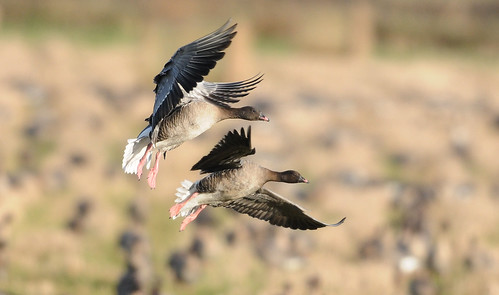
Pink-footed Geese Brian Rafferty


And in a matter of a few weeks we'll be seeing the Pink-footed Geese dropping in in their thousands like these two to winter in areas like Pilling in the north Fylde.

And finally....


Peregrine Falcon Brian Rafferty

Yet another of those 'can't resist this one' images of an incredible Peregrine Falcon food pass with the adult above dropping prey to the juvenile below....Pretty impressive stuff Brian, thanks a lot for this and the PFG.

Tuesday, 15 May 2012

Following on....


....from yesterdays post which started with the interesting wagtail sp found some years ago in our area at Aldcliffe. An enquiry as to whether there was more images of this bird - to which the answer is unfortunately a no - you may be interested in THIS which you will need to translate, unless you are conversant with the language of the Dutch.

I'll take this opportunity to apologise for an error on Birds2blog, made in the post 'New Post....Old Pics' where I inadvertently in a lapse of concentration to those who believe in me - or mis-identified to those who don't believe in me - posted a photograph of a.... 


Lesser Redpoll. John Leedal.

Lesser Redpoll claiming it to be one of a Common Rosefinch. However, this is in fact a bright male with white underparts and wing-bars and is a good example of what many birders - not including me - would call a Mealy Redpoll. The black face and the streaked flanks are good features to eliminate Common Rosefinch.  


Common Rosefinch. John Leedal.


This is the one I should have posted, this photograph clearly shows the birds red rump.


White Stork Isidro Ortiz


Isidro has been in touch with me from Spain and has kindly offered his photographs for me to use on Birds2blog. You may need to be patient if you're after an image like this one as the White Stork flies past the view of the moon....Excellent, please take a look at his website.

Tuesday, 5 July 2011

An even closer look.


There's an excellent 'Closer Look' Gallery which has recently been brought up to date on the Flyde Bird Club website and the American Golden Plover, Blue-headed Wagtail, Temminck's Stint, Kentish Plover, and White Stork are all examples of what you will find HERE 

Blue-headed Wagtail.

One of the birds featured on the Fylde Bird Club website is the Blue-headed Wagtail (BHW) and I've been taking a closer look for myself at this bird.

The fact that continental Yellow Wagtails differed from the British form escaped the attentions of ornithologists until the early 1830's when the distinction was eventually noted, and in 1834 at Colchester in Essex the first British record of a continental BHW was made. This form of the continental race is the most common one to reach Britain, and breeding with the British flavissima is today recorded almost annually.

American Golden Plover.

The first record of an American Golden Plover (AGP) - a North American vagrant - in the Lancashire and North Merseyside area was of a bird with Golden Plovers at Marshside in November 1984, four years later another was found at Fleetwood in September 1988.

The next record of an AGP in Lancashire became famous for both me and for the county, in my case it was the bird I 'twitched' with my old friend and mentor the late John Leedal, and for the county it became the first long staying AGP for Lancashire. This bird was found at Fishmoor Reservoir, Blackburn on 28 October 1995, and was last seen on 11 November which was the date JL and I went to see the bird and therefore we were amongst the last birders to see this individual. Having looked up my record of the bird I found I'd made the following note....

'After a three hour wait to see if the grim weather we had traveled to Blackburn in would clear up - which it didn't - and following a further period searching for the bird in rain we discovered it with the c.200 Golden Plovers it had been in the company of for almost two weeks now, we eventually had excellent views of the AGP, also of note here was a female Common Scoter'. The note ends....'A Good Day'.

Yellow Wagtail. Simon Hawtin

The Yellow Wagtail to be found in our area of North Lancashire is that of a scarce and declining migrant breeder of probably no more than 'one or two' pairs. The most reliable site I know of for seeing this species is/was the Halforth/Heversham Moss area where I've neither heard nor seen the place mentioned this year, though I have to confess to not having been there to see for myself.  

For the record....I have been given permission to post the photographs of the BHW/AGP.   

Saturday, 4 June 2011

First the good news.


Whether or not you live in the same area of Lancashire as me - but especially if you do - you'll love this. Maybe you'll also see the mention of someones name you know/recognise. It's excellent news and you will welcome what you read about HERE

Now the bad news....

....which is something you won't enjoy reading - I didn't either - but you must. This country is a member of the EU and for this reason alone something could/should be done to at least try to halt THIS appalling 'sport' once and for all. The EU Birds Directive has created a far-reaching protection framework for all of Europe's wild birds. There are a number of components to this scheme which Member States have to transpose and enforce through their national system.
Having seen for yourself yet again, as one example from hundreds of them year in year out, Malta appears to make little if any progress in halting this terrible business of blasting birds from out the sky. This is the 21st century we live in and it's time the hunters of Malta - and elsewhere - moved into it too and to hell with what their 'dads and grandads' did....but they obviously love it anyway and the traditions live on and thrive in 2011.

Friday, 10 September 2010

Cumbria Birds....

....of thirty years ago, but first....

Steam Crane. Peter Guy.

Another remarkable and interesting photograph of the old steam crane at Lamb Hill Quarry on the moors of the Forest of Bowland and all that remains of the stone extraction for the construction of the dam at Stocks Reservoir. I'd wager the average birder/visitor to Birds2blog didn't know about this piece of history....I certainly didn't. Thanks for this Peter, the second the the two B/W photographs you sent me recently for which I'm truly grateful.

Well, they say something good comes out of everything in varying degrees and I suppose my currently being 'off the road' gave me the opportunity to do some searching through old records to come up with something of interest from our neighbouring county of Cumbria thirty years ago. I know little detail of the birds of Cumbria today but was intrigued to find the following records/notes from 1979 when Cumbria was broken down into five areas for the purpose of recording. Randomly but systematically chosen with varying degrees of interest some of which can be regarded as 'very interesting' making you realise how things have changed both locally and nationally.

Black-throated Diver. Five records one of which stood out as being seen 2 March on the River Kent at Watercrook, Kendal inside the town boundary.

White Stork. At Brocklebank, Wigton, 3-6 June regularly seen roosting on a chimney.

King Eider. A male seen 10-23 June, South Walney B.O.

Hen Harrier. Bred at two sites in Cumbria for the first time in many years.

Black Grouse. Breeding recorded in all districts with single birds in possibly new sites.

Dotterel. A pair bred successfully on a Cumbrian site.

Temminck's Stint. At Hodbarrow 17 May. The record also reads, quote....'The last Cumbrian record quoted in R. Stokoe's 'The Birds of the Lake Counties' was September 1891.

Baird's Sandpiper. Arnside Marsh 25-30 September. The bird - a first for Cumbria - was seen by many observers and was flushed by a male Peregrine Falcon one day.

Nightjar. One seen in May at Heversham Marsh was the only record.

Yellow Wagtail. On 17 April, 25 seen at Tarn House Tarn, on 5 May, 20 at Kendal Sewage Works, on 29 August, c.30 at Killington Reservoir roost.

Stonechat. A note reads....The hard winter produced a notable decrease in most areas especially on inland sites where many were deserted in the breeding season.

Ring Ouzel. Breeding recorded in all five districts.

Willow Tit. A note reads....Still regular in woodland around Carlisle e.g. High Stand. No records from the south of the county.

Nutcracker. Two records one of which was accepted by BBRC and was seen on 22 October 1978 at Fallow Park, Bowness-on-Windermere and was the first record for Cumbria. The second record is of a bird seen on 1 December 1979 by the warden and four other observers at South Walney B.O.

Two-barred Crossbill. A female seen on 10 August at the southern end of Lake Thirlmere by an observer with experience of this species.

All interesting stuff and I personally wonder just how much things will have changed with at least seven of these fifteen records in the thirty years since they were collected in Cumbria in 1979.

I'D SOONER BE BIRDING!