BIRDING ON THE LUNE ESTUARY AND THE FOREST OF BOWLAND......................................................SPOTTED REDSHANK/GREENSHANK CONDER POOL PAUL ELLIS
Showing posts with label Bearded Tit. Show all posts

Sunday, 23 October 2022

October Chats.

Being the last visit to Hawthornthwaite Fell was on 11 July, I hadn't realised my birding had made such a dramatic nosedive, but I was here on Tuesday, and also back on Harrisend again to find 15 Stonechat on the day.

I was only on the track up Hawthorthwaite for 15 minutes before I found 6 Stonechat, all in this small area of heather looking east in the picture. The birds were mobile, and moving generally south east. Walking on for about 50 metres, when I looked again there was no sign of the birds.

Other than the chats, I saw just 4 Red Grouse and several airliners in the couple of hours spent here.


Whilst spending a few therapeutic minutes by Cam Brook, I was reminded of the smart male Ring Ouzel I saw here on 27 May. This was my fifth consecutive year of finding the mountain blackbird on Hawthornthwaite, only one sighting of which I ever had evidence of breeding here and was a female in flight with food in its bill. 

There was also a pleasant 3 hours spent on Harrisend, where I found 9 Stonechat. As with the Hawthorthwaite birds, five were together in a small area of gorse. Also 4 Raven over and 3 Red Grouse seen.

Clougha Pike From Harrisend. Pete Woodruff.

Wish I had a pound for every Stonechat I've ever seen atop of this remnant of the Hawthorn. I reckon I could get myself a couple of bottles of Jack Daniel's in for Christmas!

The Gannet.


There was a little sadness about a walk along the promenade at Sandylands last week, when I found the corpse of an adult Gannet on the shore, seen as a possible victim of avian flu.

Only a vagrant Albatross in the Western Palearctic is a larger seabird than the indigenous Gannet. Of the worlds breeding population, 48% are found in Scotland. This year there was a 90% breeding failure of Gannet on Bass Rock.

Turtle Dove.

Turtle Dove Hest Bank. Howard Stockdale.

A 1st winter Turtle Dove has been at Hest Bank since 13 October. There has been a mix of opinion about the bird, some seeing it as a sickly bird, dicing with death at the hands of the mutt brigade and their charges, others saying the bird looks well as it does in Howards image, it feeds well, and is a tame individual. Whatever....the bird would be better advised to stay put at Hest Bank, up to 100,000 Turtle Dove are shot annually on migration over Malta.  

Bearded Tit.....Another one of those must see images.

Bearded Tit Leighton Moss. Martin Jump.

Many Thanks to Howard and Martin for sending me these excellent images.

And Finally.

Hummingbird Hawk-moth. Peter Rhind.

Couldn't possibly end this post without mention of the brilliant Hummingbird Hawk-moth which gave us about 60 seconds of pleasure as it checked out the Verbena in our garden yesterday afternoon.

Pity I didn't get a pik of the moth, but I did get 30 seconds of comic relief with these two ponies at Heysham in the week....You scratch my back, I'll scratch yours!

FULL SCREEN....SOUND ON

Sunday, 16 October 2022

Sidelined Again!

Off the road again for five days, but although pleasant if cloudy there was good birding around the Lune Estuary in the week. 

Conder Green.

Starting at Conder Green with my first Whooper Swan this winter, it was accompanied by 2 Mute Swan on Conder Pool. Also of note, 3 Greenshank, 4 Wigeon, and 7 Little Grebe on Conder Pool was my best count of the day here.


The customary circuit turned up an adult Ruff preening alongside a Redshank in the creeks, with 2 Black-tailed Godwit and a snorkeling female Goosander.

Lune Estuary.

Viewing from the bowling green, there was much more life on the Lune Estuary than my last visit here on 28 September. I picked up 8 Mediterranean Gull, seen at a distance, all adult save one 2nd winter bird. Godwit numbers were at around 350 birds, estimated to be 260 Black-tailed Godwit and 90 Bar-tailed Godwit, also c.550 Knot, 8 Snipe, and a Great-crested Grebe. Two adult Avocet were by the Conder mouth, two seen in the creeks at Conder Green when I returned there after the high tide were possibly the same two.

On the canal basin, 45 Tufted Duck and a Great-crested Grebe. Noted in a field on Jeremy Lane, 120 geese in a pretty even mix of Canada Geese and Greylag Geese 

Cockersand.

It was an enjoyable hour at Plover Scar, made all the more enjoyable with the appearance of a smart Little Stint still retaining much breeding plumage.

High Tide Waders Plover Scar. Martin Jump.

There was much coming and going of waders for the hour up to high tide. Just as I arrived at Plover Scar, 3 Grey Plover were departing south along with a swathe of other small waders. As more birds flew in and settled, I estimated at least 350 Dunlin, with 55 Turnstone and 45 Knot at the peak.

I walked along the headland back to Bank Houses, from where I could see 15 Whooper Swan some distance in a field to the north. I reckon this group had been joined by the 6 Whooper Swan which flew by me inland over Cockersand C.P.

Right Place, Right Time....A Leighton Moss Treble.

Cetti's Warbler. Martin Jump.

Thanks to Martin Jump for the 'rare to be seen out in the open' Cetti's Warbler checking out the grit trays.

Bearded Tit. Martin Jump.

And the Bearded Tit, doing the splits.

Bittern. Martin Jump.

The Bittern 'we have lift off' from Leighton Moss, up and away into the blue out yonder.

Thanks to Howard Stockdale for the Little Stint in the header, seen on Plover Scar about a month ago in mid-September.

Sunday, 4 November 2012

A Mystery Solved.

 Red Admiral Noushka Dufort


The secrets of the Painted Lady (PL) have been unveiled, until now it was never known where  they went to in the autumn and the big discovery is, that just like its close relation the Red Admiral it makes its return journey to Africa at the end of summer. 

Through more than 60,000 public sightings during 2009, plus scientific and research studies, it was discovered that the PL did migrate south each autumn, but made the journey at high altitude out of observer views on the ground. When the PL's select the right conditions radar records showed that the average southbound altitude was at 500m whilst clocking speeds of up to 30mph. Findings have also revealed that this butterfly undertakes the truly staggering round trip from Tropical Africa to the Arctic Circle, a journey totalling 9,000 miles which represents almost double the length of the famous migrations of the Monarch butterfly in North America.

What is brought to light here is that this tiny creature weighing less than a gram, a brain no bigger than a pinhead, and with no opportunity to learn from experience, undertakes an epic migration in order to find plants for its caterpillars to feed on, a combination of observer, scientific, and modern technology have shown this butterfly to be a truly sophisticated traveller. 


As noted in my post on Sunday about this amazing creature, the PL entered the UK in the spring of 2009 to reach a total of around 11 million, the figure leaving the UK in the following autumn is said to be that of 26 million. The man in the street, the scientists, and researchers with 21st century technology, gathered the evidence they needed to uncover the long standing puzzle of what exactly happened to the PL at the end of summer in the UK, and furthering the proof that migrant insects amaze as they are capable of carrying out the most remarkable journeys. 


Once thought to be at the mercy of the wind and into a dead end in the lethal British winter, the Painted Lady has now revealed what an extraordinary butterfly it really is. 

With the appalling weather of 2012 in the UK it will be a different story than that told about the amazing 11 million invasion of Painted Lady's in 2009....and many other species too I imagine.

And....


Bearded Tit Marc Heath

If we're going to end with a pic it has to be this one of the Bearded Tit - though shouldn't it be called the Moustached Tit - star birds of Leighton Moss RSPB Reserve in Lancashire. But this one has arrived here from Kent via the internet....Thanks Marc, a brilliant image, much appreciated and thanks for getting in touch recently.

Another MEGA.


Spanish Sparrow Ana Minguez

A Spanish Sparrow was found today in a garden at Newchurch on the Isle of Wight. Thanks for the image of your very own Spanish Sparrow in Spain Ana....much appreciated. 

I'D SOONER BE BIRDING....Tomorrow with any luck!

Friday, 5 October 2012

Just to repeat myself !!


I've lately been going to pass the comment - but never have done - that there is always the risk of posting a subject on a blog which has already been covered in an earlier post and this is exactly what happened on Wednesday when I wrote up a few notes about the Curlew Sandpiper -  brought about by my finding five at Cockersands on Monday afternoon - only to find a few minutes after I published the post, that I had done the same on Friday 9 September 2011 on Birds2blog also titled 'The Curlew Sandpiper'. 

However, having read through the previous post I see there are a few points I made then which I haven't repeated in Wednesdays post where I mentioned one or two points not noted in September. Nevertheless, apologies for this 'there I've said it again' error....I hope you found something interesting about it.


Gadwall Dave Appleton 

Yesterday a drake Gadwall was on Conder Pool and I made the claim it was a 'possible' first record for the pool. However, a birder has put the record straight by pointing out this is not the case, and has passed on some dates he saw this species here dating back to 2008 when he saw a bird on 5 October, followed by another 30 October 2011, one 13 February, two 20 March 2011, and 9 September 2012. So I was a little out on my 'possible' yesterday which proves once again I'm not quite as clever as I make out to be, though some credibility was salvaged by my use of the word 'possible'. 

Motto....Keep the records accurate, and don't pretend to be something you're not!

Anyway, all this is a perfect excuse to post four more excellent photographs....


 Sanderling. Peter Guy.

Like this excellent shot of the Sanderling over the breakers at Rossall Point. To test your counting skills - having looked at the picture - you could make an estimate of how many birds are in it, then count them to see how good you are. I counted them four times and twice came up with 48.    

Bearded Tit Phillip Tomkinson  

And this one of the Bearded Tits at Leighton Moss. October is the perfect time to see these brilliant birds at Leighton Moss which come to the grit trays put out for their benefit.

Crested Tit Noushka Dufort  

The Crested Tit is a bird mainly confined to the ancient Caledonian Pine forests in Scotland, and this is by far the best image I have seen of the species to date.

Sardinian Warbler Antonio Puigg

And the Sardinian Warbler which breeds from the Canaries through Morocco and around the Mediterranean, it is a resident and partial migrant mainly into North Africa and the Sahara. The first British record of Sardinian Warbler was of a male on Lunday, Devon in May 1955.

Thanks to PG/PT/ND/AP for the excellent photographs they are much appreciated.

And what about the latest MEGA....

An Eastern Kingbird found on Inishmore Island, County Galway, Ireland, and a first record for the Western Palearctic. 

Sunday, 30 September 2012

On The Outside!


The Outside Bog. Unknown.

Anyone wishing to do so would be justified in accusing me of diverting too far away from birds on Birds2blog today in posting the pic above, but, no matter how hard I tried I couldn't resist what I would consider to be the best political statement of the century requiring no caption whatsoever, a picture speaking volumes.

But back to the birds....

It was interesting to see the report of a Stonechat seen at Leighton Moss Thursday last. It was a male seen atop of the reeds near the Bearded Tit grit trays. I don't recall seeing a single record of Stonechat anywhere in the vicinity this year, and few reports from anywhere in our recording area in the breeding season, which prompts the thought, where is this bird from, and has it bred around this area this year.

And a couple of excellent images to be going on with....


 Hawfinch. Phillip Tomkinson.

Not many opportunities to see - let alone photograph - the Hawfinch as well as this one, but PT made good use of his opportunity on this occasion.

Bittern. Phillip Tomkinson.  

Not many opportunities to see - let alone photograph - the Bittern either, but PT made good use of his opportunity on this occasion too. For all we know this image could well reflect the sum total of Bittern at Leighton Moss today as I suspect this may well be the case....But now someone is going come forward to tell us I'm wrong on that suggestion.

Thanks to Phillip Tomkinson for the two excellent photographs. 

And finally... 

Putting a smile into birding.

For all the birding ID 'goofs'....don't worry I'm one too. A Wilson's Phalarope reported this morning was later identified to be a Spotted Redshank....Mmmmm!!  

Tuesday, 10 July 2012

Hide Hugging!


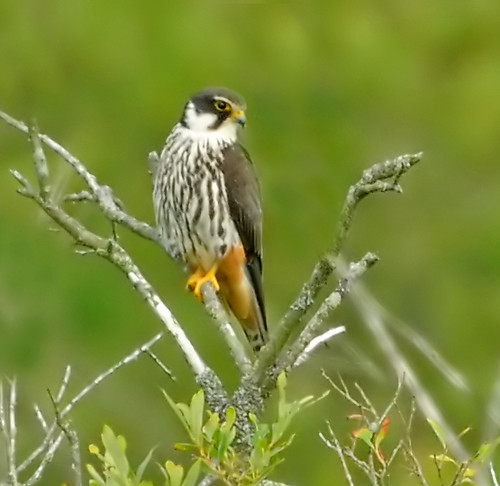
With some business to see to regarding the Pied Flycatchers with JW today I decided afterwards a visit to the RSPB Reserve a Leighton Moss was an idea, after all there's been a Hobby seen there for a couple of days and a Hobby at Leighton Moss or anywhere in our recording area - and beyond for that matter - is all but a dream. 

Hobby 2
Hobby. Brian Rafferty. 

So with only limited time I went to the Public Hide with high hopes and gave it an hour or so to no avail, but had excellent views of 4 Marsh Harriers, one of the reserves main attractions along with the Bearded Tit and Bittern.  A Buzzard was soaring above the wood opposite the hide, and 8 Teal flew over and around the mere before disappearing onto one of the back pools, otherwise pretty quiet. BR had a rare opportunity a year or so ago to get some excellent shots of this brilliant little falcon at Leighton Moss as illustrated above, and more recently of the Marsh Harrier below. 

Marsh Harrier. Brian Rafferty.


About thirty minutes in the Lillian Hide gave the spectacle of up to 300 Swifts hawking insects over the pool along with just 2 House Martins easily picked out of the crowd, and a solitary Sand Martin, another 2 Marsh Harrier were also seen here and another Buzzard over the wood. A Moorhen seen below the hide had climbed the stem of a Reedmace to feed on the seed, a curious sight and a first for me.


Eider
Eider. David Cookson.


I decided to look in at Teal Bay on the way home to see the tide coming in and counted 102 Eider including four juveniles I noted, also 4 Whimbrel and 2 Bar-tailed Godwit, a male Blackcap was singing in the bushes behind me.


I insist every visitor to Birds2blog reads the story in the link, this is as bad as it gets and please do take a close look at the 'woman' who clearly shows what she is in the photograph HERE

Wednesday, 29 February 2012

This is a joke!


A serious matter with a joke tagged to it, and in drawing your attention to it a good excuse for me to post four more stunning photographs I keep being allowed to publish on Birds2blog.


So theres this serial egg collector who lives in London, he has become the first person in England to receive an Anti Social Behaviour Order (ASBO) for crimes against nature. He is also believed to be the first person to receive an ASBO restricting him from visiting Scotland.


OK....so you've already seen the 'serious matter' and are now aware of the 'joke'....unless you can tell me how this ASBO is going to be policed. But this guy is a lunatic, and in the case of the birds and their eggs a dangerous lunatic, this bloke is currently serving his fourth prison sentence for egg collecting, and yes you guessed it, he holds the record in the UK for the person who spent the most time in prison for stealing eggs, and the ASBO he has now been awarded is because of the damage he wreaked on rare birds and the stealing of their eggs.

So who has the task of keeping an eye on this man, the ASBO lasts for the next ten years - the maximum term for these orders - and it is supposed to prevent him from travelling to Scotland during the breeding season because of his repeated stealing of Golden Eagle and Osprey eggs, furthermore, he is banned from all RSPB and Wildlife Trust land for the same period of ten years. Well....if you can't see the joke about all this I'm sorry to tell you your mind is failing you at a much faster rate than mine is. 

But of course something has to be done about these people with this kind of passion about our wildlife, and the good to come out of this is, if Mr Egg Collector is found breaching this order, instead of the maximum £5,000 fine and six months in prison, he can be handed out a fine of £20,000 and five years in prison, but....if he does go to Scotland let alone steal eggs, who is going to catch him.  

Now the good stuff, stunning photography with just a little waffle.... 


 Bearded Tit Marc Heath  


An impressive start with the Bearded Tit from Marc....

 Long-tailed Tit David Cookson

Followed by an equally impressive Long-tailed Tit from David....

 Redwing Tony Duckett


A brilliant Redwing from the Regents Park man Tony Duckett....apparently not many of this species or Fieldfare being seen in this country this winter....

Sparrowhawk Brian Rafferty


And last but certainly not least, the close encounter with the Sparrowhawk by Brian.

Monday, 31 May 2010

Leighton Moss.


Broad-bodied Chaser. Paul Baker.

KT had suggested a walk round Leighton Moss might be a good idea today....well its birding I thought and away we went. Bearing in mind the photograph above was taken in Canada it is of a female Broad-bodied Chaser until someone claims it to be otherwise, I noted four during the tour of LM today.

Like birding anywhere else its always done on the principal you never know whats next, well there wasn't a 'whats next' today but on the way round 4 Chiffchaff were heard, excellent views of a Reed Warbler were had at the Lower Hide where I must confess things were otherwise a little quiet noting just a solitary Great-crested Grebe and 2 House Martins flew through. Although I found bird song generally in short supply Sedge Warbler were heard, 2 Buzzard were high above, and although I had no intention of working out how many Marsh Harriers we saw, male and female were seen throughout the visit. A Jay was seen from the path to the Grizedale Hide as were 2 brief Bearded Tits in flight across the path. At the hide up to 40 Black-tailed Godwits counted, at least 14 Gadwall were of note, and 6 Red Deer put in an appearance.

I think the highlight sighting of the visit to this excellent RSPB reserve before leaving for home was back at the centre where four of our areas outstanding birders were assembled on the benches having a chat, in keeping with Birds2blog 'no names without permit' policy it was a pleasure to pass a few moments in the company of such local birding talent.

And finally....


I dropped in HERE  to have a look at Phils blog and found these two images to which he claimed the Meadow Pipit was so interested in what was falling from the sky that he almost got to touching distance to get this shot of the bird. I reckon you're right Phil....Can't take my eyes of you!