BIRDING THE LUNE ESTUARY THE FOREST OF BOWLAND AND BEYOND.......................................................................COMMON TERN CONDER POOL PETE WOODRUFF
Showing posts with label Wood Sandpiper. Show all posts

Sunday, 4 January 2026

Reviewing 2025.

I enjoyed flicking through the little black book for some highlights of birds found or seen through 2025. It was never going to be regarded as a spectacular year, but at least it resulted in getting much more of a fix from my birding than anything else.

* Excellent species and or location records....Photos & Video Pete Woodruff.

January
15  Bullfinch pair Lanc's Cemetery *
17  Common Scoter Stone Jetty M'cbe
17  Scaup Broadway M'cbe
25  Blackcap male home garden *

February
13  Hen Harrier male C'sand
18/ 27 Marsh Harrier female C'sand

March
Tundra Bean Goose with c.5,000 Pink-footed Geese C'sand *
12  Barnacle Goose Conder Pool *
12  March Harrier C'sand
12  Whooper Swan c.500 C'sand *
19  Hen Harrier in flight N>S over Moss Lane C'sand
20  Bullfinch 2xmale/female Lanc's cemetery *
24  Mediterranean Gull adult/Little Ringed Plover Conder Pool
26  Spotted Redshank Conder Pool

April
Garden Warbler Crag Wood early record *
11  Ring Ouzel female Hawthornthwaite *
29  Willow Warbler at least 50 Birk Bank circuit
29  Bullfinch 2/Cuckoo 2 Birk Bank *

May
Crossbill 15 Tower Lodge Bowland *
18 Cetti's Warbler Glasson

28 May Little Gull 2 x 2nd summer Conder Pool *

June

25 June 7 of 17 Mediterranean Gull Conder Pool *

July
9 Swift at least 20 Fairfield Lanc's

August
6 Green Woodpecker Birk Bank *
20 Yellow Wagtail 2 Conder Pool * 
22 Ruff 20/Wood Sandpiper Heversham Moss
28 Ruff 19/Green Sandpiper Conder Pool *

September
5 Greenshank 32 Conder Pool *
9 Curlew Sandpiper Lune Estuary
25 Crossbill pair Ottergear Bridge *

October

8 Oct 9 of 18  Whooper Swan Conder Pool *

30 Merlin male C'sand

November
12 Snow Bunting 2 C'sand

20 November Bewick's Swan 2 Slack Lane C'sand *

24 Pintail drake Conder Pool
24 Pink-footed Geese c.3,500 Slack Lane C'sand

25 November Barnacle Goose Lune Estuary *

December
23 Brent Geese 52 Heysham

.....................................................................................

Hoping you have good birding in 2026....

A Very Happy New Year 

Sunday, 24 August 2025

Around The Estuary And A Trip Down The A6.

For starters, there was some bird behaviour to be see on my latest visit to Cockersand, nothing too surprising, but interesting just the same.


This silo is situated at Bank House Farm at Cockersand, and as I set off on the circuit, it came into view to reveal up to 60 Swallow. These birds took me by surprise, in that they were obviously feeding on the wing inside the silo, they kept appearing over the rim before dropping back inside. Something of a spectacle when 60 birds were up and down like a yoyos in and out of the silo.

When I returned 2 hours later, having walked along the headland to reach the spot again, in a similar number, Swallows were in the field behind the silo, this time they were feeding low and over Yarrow.
 

For a bird with a mammoth task ahead of it, opportunism at its best I thought, and a flight of c.8,000 to reach the continent of Africa after 6 weeks of virtually non-stop flying....Knocks y'er socks off dun'it!

The Cockersand Circuit.

Truth is, I'd been plodding along for an hour and had seen nothing of note, then all of a sudden 2 Wheatear dropped onto the kissing gate by the abbey. This was followed by another spell of nothingness, until I reached Bank House Farm again to make another check of the area. Well blow me over, there are 2 Yellow Wagtail on the rim of the 'Swallow Silo'.

Painted Lady Cockersand 20 August. Pete Woodruff.

A personally poor year for butterflies continues, though today I raised it to 'moderate', seeing up to 100 'whites' including 3 Green-veined White, 12 Small Tortoiseshell, 2 Red Admiral, a Painted LadySpeckled Wood, and a Silver Y moth.

Conder Pool.

I was rewarded with my best - and probably everyone elses - all time count of 27 Greenshank on Conder Pool, with 13 Little Grebe counted.

Little Ringed Plover Juvenile Conder Pool 20 August. Pete Woodruff.

Also a juvenile Little Ringed Plover present, and 2 Wigeon were both female and the vanguards of things to come.


Also present, 2 Ruff and 4 Snipe....Not all in the video.

A Trip Down The A6.

Nine years ago on 13 September 2016, I made the same trip down the A6 to Heversham Moss, to see the same two species of birds at the same place as I did this time. That day I saw 2 Wood Sandpiper a Pectoral Sandpiper, a Green Sandpiper, and 22 Ruff.

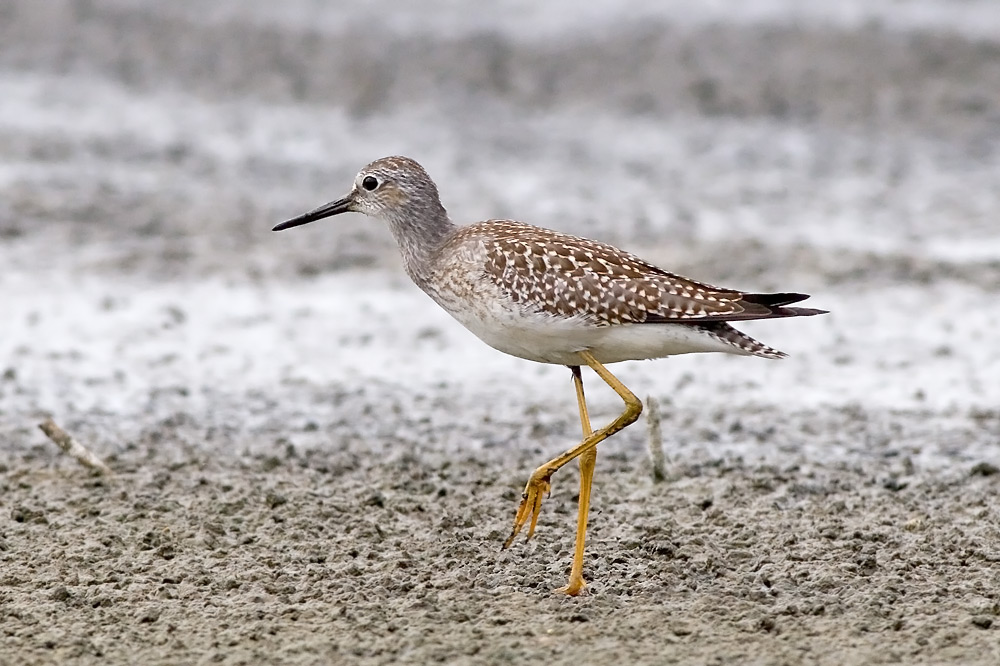
Wood Sandpiper. Antonio Puigg.

On Fridays visit, I saw a Wood Sandpiper, 20 Ruff, up to 12 Pied Wagtail, and at one point a Sparrowhawk put up all and sundry from the flood, and eventually made one attack at Swallows before being lost to view.

With time on my hands and whilst in the area, I called at Leighton Moss RSPB Reserve and went to the Eric Morecambe Hide. Not the best time of day for birding from this hide if the sun is shining brightly in your face.


Putting in a bit of effort, I estimated the silhouettes to be at least 260 Black-tailed Godwit, 60 Redshank, 8 Knot, 5 Avocet, 5 Snipe, 3 Ruff, and 2 Dunlin. On the inner marsh, 2 Great White Egret and 18 Little Egret.

Migrant Hawker. Pete Woodruff.

Along the path to the hide, a male Migrant Hawker and 5 Speckled Wood, 2 Red Admiral, and a Small Tortoiseshell. 

And Finally.

With favourable weather, there have been opportunities to find and photograph some insects in the garden, particularly on the Alium.

Hoverfly Syrphus sp and Honey Bee. Pete Woodruff.

Red-tailed Bumblebee Bombus lapidarius Pete Woodruff.

Common Carder Bee Bombus pascuorum Pete Woodruff.

Wednesday, 5 July 2023

Conder Pool....A Personal Perspective.

Over the past two years, I've changed direction during the summer months to pay more attention to dragonflies. The change has resulted in my finding what I regard as the best site/s to see good numbers of the Golden-ringed Dragonfly, and the best site to see an expanding colony of Keeled Skimmer.

This change gives the appearance that I've turned my back on Conder Pool, but actually this is not literally true. But what is true, is that I have partially lost contact with a site that has given me endless enjoyment and many rewards over the years, a few examples include a White Winged-Black Tern in August 2003, a Black-necked Grebe 5 years later in August 2008, the following month  I found a Common Scoter in October 2008, and two months later, the first Common Sandpiper to winter here in November 2008, through to a Wood Sandpiper being found 9 years later in August 2017.....So I'm 6 years overdue my next goodie on Conder Pool! 

Conder Pool August 2017

Conder Pool doesn't quite look the same today as it did during management work 6 years ago in 2017.  

My last post highlighted a large new raft which is in place today and held 10 adult Common Tern including 5 sitting female, and 9 chicks. This number of Common Tern, and others not seen in my observations, represents an ever increasing colony of a species that bred in large numbers on the Lune Estuary saltmarshes, until it collapsed in 2008. A combination of factors was the cause of the collapse, natural predation and erosion of the marshes was always going to be a problem, but not least due to human recreational disturbance which was unnatural, unnecessary, and avoidable.

The Common Tern present on Conder Pool today in 2023, represent a mere fraction of this former estuary colony, but the hope is that all this will change over time. There are some credits due to this, funding by Natural England, the RSPB, and the Environment Agency, have all contributed to this project going forward. Credit has also to be paid to volunteers from the Fylde Bird Club who gave their time freely, also to management and staff at Glasson Marina who have been instrumental in making the project work, supplying salvaged marine pontoons, floats and timbers. 

In my opinion, a special thanks should also go to Howard Stockdale, who spends many hours in a week monitoring activity, data collecting for the RSPB, and assisting Ian Hartley (BTO), who does sterling work including ringing the Common Tern and Avocet. 

Little Ringed Plover With 2 Chicks Conder Pool 2 July. Howard Stockdale.

Conder Pool has been a large chunk of my birding over many years, and it's my hope that, through all the funding and labouring by the people involved in this project, Conder Pool is rewarded by a successful return to the former glory of yesteryear regarding a delightful and elegant bird that is the Common Tern.

When I see the recently fledged Common Tern in my header image, I find it exciting and rewarding enough that the colony is slowly being successfully increased to it's former glory by this individual.

Update.

As of yesterday, there is the grand total of 14 Common Tern nests, all active on Conder Pool. The latest I have on the Avocet, 6 are fledged of which 5 are colour marked, 2 more are still to fledge, and 2 are two weeks old.

Thursday, 6 May 2021

Brief But Brilliant.

A surprise at the snow on the Lakes mountains yesterday, quite a fall and not just a dusting....Was this really 5 May. But a bigger and better surprise was in store for me 4 hours after I took the header photograph. 

As I came off the grit track from the route up the east side of Clougha, a bird on a fence post some distance away caught my eye. As I walked to get closer, sods law, the bird took off went and out of view. Another one to get away me thinks, but luck was on my side, I picked it up again, but unfortunately just as far away as ever. This bird was giving me the run around, now it was atop of yet another tree even further away, and worst still, promptly decided to disappear, this time for good. A search in the disused quarry which is where I thought the bird had flown and was perfect habitat for the species, proved fruitless.

Back Redstart. Image Credit Greg Bradbury.

I'd have been elated to have had excellent views of my bird in the Birk Bank area yesterday like this one, but I did see enough of it to ID as a female Black Redstart, sooty brown and lacking white wing patch, though a 1st summer male also lacks this.

For me, this was a well overdue sighting with a bit of quality. The last being nearly 4 years since I found a Wood Sandpiper on Conder Pool 7 August 2017.

Thursday, 30 July 2020

The Little Brown Job!

I had two e-mails over the weekend, one included an image of a wader. I was amazed at how time flies when I discovered it was 6 years ago since I found a Wood Sandpiper on Conder Pool 10 August 2014.  

The second message was the reminder of a butterfly found 11 August 2018. The last time I had seen the author of the e-mail was at Glasson Dock when together we found 9 gulls all ringed, including 5 Common Gulls, a species I had never found ringed before. 

Brown Hairstreak at Gait Barrows.

Given that the Brown Hairstreak has a localised distribution almost entirely in Southern England, the South Midlands, and South Wales, with the nearest colonies in East Worcestershire some 150 miles away, the obvious question is; how did it get to Gait Barrows in Lancashire. There are three possible explanations: 1) This elusive and largely arboreal butterfly could have been ever present, but was simply overlooked or mistaken for the widespread Purple Hairstreak. 2) Brown Hairstreak eggs were inadvertently brought in by local landowners when Blackthorn from nurseries outside the area was planted in the vicinity. 3) An unauthorised release of a small number of adults, or late stage caterpillars. The latter option for the reappearance of Brown Hairstreak in North Lancashire was favoured by three experts in the field. 

Ref: Butterfly Conservation Lancashire Branch, Winnick, Dunbar, Sivell
 
I'm hoping to make a break to freedom tomorrow and I think I know where I'm going.

In the garden.


A Small White, Red Admiral, and Speckled Wood. It was also good to see a young Robin and Greenfinch in the garden. 

Tuesday, 10 July 2018

Updating The Pool.

My birding yesterday amounted to little more than an update on things Conder Pool and around.

Four adult Common Tern seen included the sitting bird on Tern Island and it's on guard mate. The two other adults seen in the air most of the time on a chase, were not necessarily the other breeders as six adult were reported here on Sunday. So the family party may well have already dispersed as no young were seen in two visits I made yesterday, no big surprise though, as last years young fledged on 7 July, and were never seen again after 14 July. 

Redshank Conder Pool 9 July. Pete Woodruff.

A Redshank chick, and two - possibly three - older young seen, which were in classic Wood Sandpiper lookalike plumage with some downy feathering on the head. Void of checking my records, 260 Redshank counted were probably an all time high for Conder Pool. Five Little Grebe was another increase in numbers, 2 Avocet adult were seen, with one visiting the creeks twice to feed, but no sign of any chicks, 2 Wood Pigeon flying on to the near island was a bit of a novelty.

In the creeks, 10 Common Sandpiper and a Greenshank, and upstream from the road bridge, a Snipe seen, and singing Sedge Warbler. Along the coastal path, 12 Gatekeeper, a Red Admiral, and Brown Hawker seen. 

Wednesday, 14 September 2016

Let's Twitch Again!

I got myself into twitching mode yesterday, it's not habitual for me to go after other peoples birds, but there was some nice ones just over the border into Cumbria, so it was time I got myself off to take a look.

Wood Sandpiper Antonio Puigg

First stop was at a flood on College Green farmland at Heversham SD488837 where I found 2 Wood Sandpiper, one of which was notably lame, also on the flood were at least 9 Snipe, more perhaps if I'd have tried harder and found them in areas of long grass.

Pectoral Sandpiper Jan Larsson 

Next stop was actually just around the corner at SD488832 where eventually a Pectoral Sandpiper put in excellent views to clearly show it to be a juvenile, also seen were 22 Ruff, a Green Sandpiper, and at least 18 Snipe.

A drive out to the Brigsteer area SD470892 where a Pectoral Sandpiper was found on 10 September, proved to be a 'twitchers dip' though the bird was reported back here again at 4.30pm two hours after I left, when I had seen 4 Ringed Plover and a solitary Dunlin, with a Buzzard over.

Another short list, and a bit like a day at the zoo to be honest, but with some birds of substance this time.

Thanks to Antonio and Jan for their excellent and much appreciated images.  

Sunday, 10 August 2014

Wood(ruff)Sandpiper.

I've always been an advocate of returning to a location visited earlier in the day, to see if anything is to be found which may have been missed on the first visit. 


Lesser Yellowlegs Martin Lofgren

The best example of success in this regard has to be the day in September 1997 when - having been there in the morning - I returned later in the day to the Eric Morecambe Hide at Leighton Moss with John Leedal to find a Lesser Yellowlegs....a memorable 'birding booster' day indeed.

Wood Sandpiper Marc Heath

But Thursday was no exception to this practice, when I returned to Conder Pool five hours after my first visit to find a Wood Sandpiper which came into view from behind 'Tern Island'....magic birding moments.

But back down to earth and my first visit to Conder Green, I saw 2 Common Tern on the island, which by now I reckon should have young in the nest, though the vegetation is too high to see them yet. Also on the pool, 3 Little Grebe which appear to be a pair and a juvenile, and 17 Greylag. In the creeks I could only find 2 Common Sandpiper, with 4 Greenshank, a Spotted Redshank, with up to 200 Redshank in the Conder channel.

The Lune Estuary at Glasson Dock probably held c.800 waders as viewed from the bowling green, with Curlew and Lapwing present, c.400 Redshank, 250 Dunlin, and 2 Little Egret noted.


Herring Gull. Scott Wieman. 

At Cockersands, a plan to include checking out Plover Scar was thwarted by people out there seeking adventure in the sun, but before they got too close to the birds I was able to note, c.350 Herring Gullup to 8 Whimbrel, and 2 Little Egret, all departing at the arrival of the aforementioned human invaders, 11 Eider were off the scar. Five Linnet were flighting along the headland, and I again saw a flock of up to 80 Tree Sparrow. Feeding over the wheat field SW of Lighthouse Cottage were at least 400 Sand Martin with a few Swallow and House Martin seen. 

Thanks to Marc for his excellent Wood Sandpiper which includes the new header, to Martin for his image of the glorious Lesser Yellowlegs, and to Scott for the Herring Gulls.

And finally...


Stonechat. Findlay Wilde.

Couldn't resist this excellent shot of the young Stonechat, seen and photographed by the equally young 'keen as mustard' Findlay Wilde on his recent holiday to stay at Portreath in Cornwall.

And the weather....Many parts of the country will be on storm alert today as the remains of Hurricane Bertha track across the Atlantic....out with your sea-watching gear!

Wednesday, 21 November 2012

Time On My Hands.

With a little time on my hands yesterday afternoon I went off to Aldcliffe to see if I could find the long staying American wader which has actually been here for a month to the day having been found here on October 21.

A downpour had just passed over and the light was beginning to fade, though what was left of the sun shone into my face, very nice but didn't help the chances of getting good views of this bird even if I found it.

Tim Kuhn: Yellowlegs  Yellowlegs
Lesser Yellowlegs Tim Kuhn

But with a little persistence I did come across a bird semi-silhouetted looking suspiciously like it wasn't a Redshank, and wait a minute, there's another bird next to it now and this is definitely not a Redshank 'cos it's too small. So now its my lucky day and I've got a Lesser Yellowlegs, and a Wood Sandpiper 'rubbing shoulders'....isn't birding great! 

Wood Sandpiper Antonio Puigg

This is my sixth Lesser Yellowlegs, and I've had one or two Wood Sandpipers, my best record was on 7 October 1999 when I saw seven together on the Eric Morecambe pools. This Wood Sandpiper at Aldcliffe is regarded as being 'late' and wintering records are very rare, though I spoke to a birder from Cheshire yesterday who told me he'd seen Wood Sandpiper in Norfolk one year in January. There is one breeding record in England, a nest with eggs and an adult seen in Northhumberland in 1874, there are other claims which are less well authenticated.

As for the Lesser Yellowlegs - which as become a regular visitor to the County of Lancashire - the first record for the north of the county didn't come until 1995 when I found one on the Eric Morecambe pools at Leighton Moss RSPB Reserve. But an amazing record of two birds which moved around - both together and independently - between Banks, Marshside, and Martin Mere during a twenty month stay in the area had them registering as 'possibly breeding' during their lengthy stay from October 1997 to May 1999.

Sunday, 21 October 2012

Another Post Meridian.

Eider Gary Jones  


I saw no Eider on the day but the header photograph of this drake for the post is as good as they come....Thanks Gary 

It was after-noon again when I got out on Thursday, the 10m tide was well on its way and the waders were off looking for high tide roosts. So before the road went under the tide, I paid a brief visit to Conder Pool to find a Greenshank, Spotted Redshank, and Common Sandpiper had already taken refuge on here along with 10 Little Grebe.


I decide to give Cockersands a pretty good going over, but a good 2.5 hours later proved it had never looked like it was ever going to resemble the west coast of Ireland. There was just a few meters of landward Plover Scar above water and a solitary Turnstone and Ringed Plover were hanging on to what was left with a Rock Pipit, another one/it was seen later. One of the Abbey Farm fields held up to 1,000 waders which went into the black book as estimates of, 550 Golden Plover, 230 Lapwing, 220 Curlew, an adult Mediterranean Gull was in the midst of c.120 Black-headed Gulls

I found it rewarding - in a way - that a birder I had a chat with at Cockersands was also having an unproductive visit here too which gave me the feeling I wasn't alone in the desert. But a count of at least 40 Skylark were of note, with 14 Tree Sparrow, 18 Goldfinch, and 6 Greenfinch

A Snipe flew up out of a ditch along Jeremy Lane, and calling in at Glasson Dock on the way back to Lancaster was to prove the tide hadn't dropped off enough for the waders to return, but I did note c.500 Golden Plover

And now....


Little Egret Ana Minguez 

An excellent image of the Little Egret having a scratch. A recent record of note is that of 117 Little Egrets leaving the overnight roost at Leighton Moss on the Friday morning of October 12.

Azure-winged Magpie Isidro Ortiz 


And a bird you may never see - the Azure-winged Magpie - unless your birding includes foreign travel to maybe Spain or Portugal. Thanks to Ana and Isidro for these two brilliant photographs.


And finally, another excellent video, this one of the Pink-footed Geese on take off....'Pink sky at night the birders delight' courtesy of Colin Bushell


The Aldcliffe Double.

Wood Sandpiper Antonio Puigg 

Today yet another Lesser Yellowlegs in our area was found at Aldcliffe along with a Wood Sandpiper for the double. With no time to look for a photograph of the rarer of the two, I have to thank AP for the Wood Sandpiper.

Friday, 31 August 2012

A Complete Blank!


This is not good, and I get no enjoyment from creating this post which is to report a week completely void of any birding, depressing stuff and I can't go on like this, things must change....and soon or else.

Floods have been the areas to check recently, though a flood anywhere anytime is always worth a check and if you live in the same area as I do one at Aldcliffe is as good as they come. But  three particular floods have been in the news in the past few days, and all have hosted some 'good birds'.


Wood Sandpiper Dave Appleton 

A flood viewed from Lancaster Road near to Lousanna Farm at Out Rawcliffe - which I know well and drove past many hundreds of times during my days delivering car parts - held a nice Wood Sandpiper this week along with a number of Ruff which reached a double figure in one report I saw. Another Wood Sandpiper was present during the week on another flood at Todderstaffe Hall on the Fylde. I can offer no accurate number but I recall going into the Allan Hide at Leighton Moss with John Leedal one day to find c.8 Wood Sandpiper together, a record I never equalled since....Thanks for the photograph Dave.   


Pectoral Sandpiper Colin Bushell

On yet another flood NW of Garstang and east of Lathwaite, a Pectoral Sandpiper was present this week too with another on Banks Marsh. The Pectoral Sandpiper is the most numerous Nearctic wader on this side of the Atlantic, in excess of 1,400 were noted between 1958-85 an average of over 50 birds a year. The one in the image above was in Manu, Peru 2010....Thanks for this Colin.

Lesser Snow Geese Geoff Gradwell  

I think the biggest 'Lancashire' surprise of all this week was the appearance of Lesser Snow Geese on the Fylde coast where the number peaked at thirteen at Cockers Dyke on Pressall Sands. The image above is of seven of these thirteen birds which were also over Rossall Point at Fleetwood...Thanks Geoff.

And finally....

Common Sandpiper Antonio Puigg

I wonder if the Common Sandpiper will winter again at Conder Green, this bird was photographed 'nodding off' recently in Spain....Many thanks Antonio.

And the MEGA news today was of a Yelkouan Shearwater past Whitburn Steel in Co.Durham.

I'D SOONER BE BIRDING....NEXT WEEK OR ELSE!!

Thursday, 7 June 2012

On a Mission.


This is my fifth year at Barbondale of being involved with a nest box scheme jointly with John Wilson directed in the main to the Pied Flycatcher (PF) which until now I've keep quiet about based mainly on the popularity of the area, but also the privacy of the land I refer to where permission obviously had to be obtained to erect the nest boxes in the first place. In this regard I have always been of the opinion that the least said about this the better. Whilst I don't particularly like being in a position to dictate....'do what I say, not what I do'....I'm sure it is appreciated that being on private property the scheme would be in jeopardy if anyone was found to be trespassing in the name of obtaining a photograph, or to take a closer look at the boxes and their content if that was the case.

All of this said, I think there is nothing more to be gained in the silence as lots of birders/photographers/or just visitors to the area will by now know - or have seen for themselves -  some of the nest boxes from the path, and I can only now trust that we can all keep to some sort of code of conduct to the advantage not only of the birds, but also the delicate balance between the private land they occupy which is below an accessible footpath, to this end I can share the success story of Barbondale and its PF's, the full story of which I'll post at some later date, meanwhile, back to today's 'Mission'.      

Since 30 April I've made five visits this year to Barbondale that has slowly built up over the weeks to today's findings which has seen the continuation of what I can only hope will be the success story of 2012 for the Pied Flycatchers of Barbondale, an area of old woodland which held  few - if any - of the species in the recent past, though I don't pretend to know the full history in this regard. 

On my last visit I was able to establish that ten PF's were in the woods this year representing five pairs, four of which had a nest with seven eggs with the fifth nest holding a female sitting tight which I was not prepared to disturb. Today it was found that the five nests held a combination of eggs and recently hatched naked young, add to this the excitement of finding two female which were ringed of which was one was found to be an adult female ringed last year which has returned to Barbondale to breed once again as a two year old bird at least, more excitement was in the fact that this bird was ringed here on the very same date as this recapture today 7 June.....To be continued.


With all this going on today I had little time to do any birding but did note, c.14 House Martin which surprised me, if these birds were not from a decent colony at the farm here I can only assume they were on a feeding mission, also a few Swift over, up to 4 Redstart males, a Spotted Flycatcher, Dipper, Nuthatch, and a Great-spotted Woodpecker. Opportune feeding behaviour was noted on Barbon Beck again today as on 18 May with Pied Flycatcher, Redstart, Meadow Pipit, Chaffinch, Wren, Reed Bunting all taking advantage of insects available on the stream as opposed to insects not available elsewhere, JW and I both agreed on this.

And finally, well we do have to have a couple of pics don't we, five actually.... 


Sanderling. Peter Guy.

First the Sanderling at Rossall Point, hard to believe the epic journey to its high Arctic breeding grounds this small wader will be about to undertake anytime soon.

Wood Sandpiper Antonio Puigg

And another wader the Wood Sandpiper. Will this bird be going to breed in northern Europe, or perhaps in the Scottish Highlands where the flooding of some previously drained traditional marshes may start to help this species in the future.


Roller Antonio Puigg

A Roller present at Aldbrough in East Yorkshire for several days now has dearly tempted me to become a 'twitcher' for the day, but I haven't yet succumbed....some bird.


Thanks to PG/AP for the photographs, much appreciated.  

Wednesday, 10 August 2011

Out of time....again!

With the weather set to be similar again tomorrow things not looking all that exciting birding wise at the moment, but always an opportunity to have another sift through history to find some random records.

Swallow on the wire. Geoff Gradwell 

Twelve months ago today I watched c.300 Swallows lingering a few minutes at Conder Green which included a jaw dropping pure white albino type. I can't help wondering if this was a once in a lifetime observation for the species. 

One or two other records of interest noted during the search....

chimney sweep moth
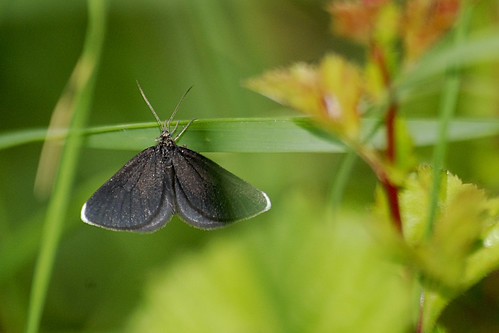
Chimney Sweep. Aileen Urquhart.

The only Chimney Sweep I ever saw was on Hutton Roof on 24 June 2003. A daytime flying moth found in areas of limestone and is completely black save the tips of its forewing, it is local throughout Britain. I noted c.300 Small Tortoiseshell at Cockersands on 10 July in the same year.

On 14 June 2004 I found 9 juvenile Ring Ouzel together at a location in the Forest of Bowland. In the same year, 2 Pectoral Sandpipers were on Conder Pool. On 5 November 2005 I found a Grey Phalarope at Heysham Harbour, and on 11 July at Halforth I saw an amazing 16 Little Ringed Plover, and 12 Clouded Yellow butterflies were seen along the coastal path towards Cockers Dyke from Fluke Hall on 7 August.

Painted Lady. Phillip Tomkinson

An amazing 149 Painted Lady butterflies were found on Clougha/Birk Bank on 30 May 2009. And 2 Wood Sandpiper were on Conder Pool on 4 September 2009.

I'D SOONER BE BIRDING....BUT WHO KNOWS WHEN!