BIRDING THE LUNE ESTUARY THE FOREST OF BOWLAND AND BEYOND..............................................................................HUMMINGBIRD HAWK MOTH PETE WOORUFF

Friday, 18 October 2013

The Great-crested Grebe.

Great Crested Grebes
Great-crested Grebe Astland Photography 


On Tuesday I saw a Great-crested Grebe (GCG) floating downstream on the River Lune on the ebbing tide at Glasson Dock. This bird reminded me that I had been thinking recently how long it has been since I last saw a GCG. The LDBWS Annual Report for 2012 and two other annual reports I've been reading all refer to the GCG in similar words as 'a scarce resident breeder and common winter visitor'. I've seen one of the breeding pairs this year with two young from the Public Hide at Leighton Moss, but wintering GCG according to my records and void of searching others, are becoming less common and I'm not seeing them where I used to regularly.

Oakes made little reference to the winter distribution of the GCG, but it was clear by the 1960's that large numbers were sometimes present throughout the Lancashire coast, the species benefited from the creation of reservoirs and gravel pits in the 20th century. But by the mid 1800's GCG were persecuted for their plumage in the millinery trade and for making feathered muffs, the population plummeted to an estimated 42 pairs nationally. In 1962 an amazing count of 500 individuals was made on one day in November off Morecambe. Historically Morecambe/Heysham have held nationally important numbers, in 2003 an estimate of British wintering GCG stood at almost 16,000 birds, nothing like that figure today and with a decline to some degree.

And here's another member of the same family....


Black-necked Grebe
Black-necked Grebe David Cookson 

A Black-necked Grebe, not quite as smart as the adult above, this was a juvenile which I found on the excellent Conder Pool on 1 September 2008, the bird stayed on the pool until last seen 17 days later on 18 September.

And finally, not a member of the same family, but couldn't resist it....


Collared Pratincole. Gyorgy Szimuly.

A brilliant image of the Collared Pratincole near breeding grounds in Romania May 2006 and featured on the front cover of the latest bulletin I recieved from International Wader Study Group 

Wednesday, 16 October 2013

Going South....

....south west actually to Pilling, and not a lot of pen and paper needed either. 


Going to roost
Pink-footed Geese. Brian Rafferty. 

I've been threatening to go south the past few times I've been out birding, yesterday I carried out the threat and an estimate of 10,000 Pink-footed Geese on Pilling Marsh were the first real number for me this year, as were my first 11 Whopper Swan which included a juvenile, also 6 Barnacle Geese and 6 Little Egret, a Peregrine Falcon was squat out on the marsh quietly surveying and planning its next move. 


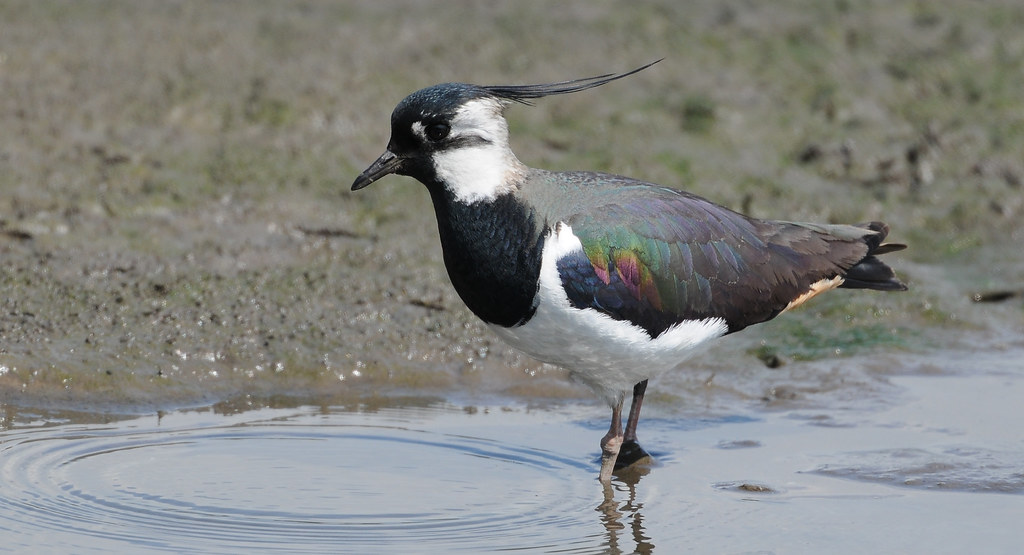
Lapwing. Wash and Brush Up
Lapwing. Brian Rafferty. 

On the Lune Estuary at Glasson Dock, c.750 Golden Plover was another best count this back end of the year, and I should try to be a 'real birder' now and again and concentrate on coming up with some figures for the Lapwing here sometime, they were in huge number again today. Also noted, c.120 Dunlin, a Spotted Redshank, Greenshank, a solitary Bar-tailed Godwit, Great-crested Grebe, and 2 Little EgretI spent relatively little time at Conder Green but got another increase in the count of 12 Little Grebe on Conder Pool, with 2 Spotted Redshank and a Little Egret in the creeks. 

Thanks to Brian Rafferty for the 'Going To Roost' PFG - definitely a must 'clik the pik' this one - and for the Lapwing.

And finally, perhaps a few more words about this one on Birds2blog sometime, meanwhile....


The RSPB has teamed up with a green energy company and submitted a planning application for a wind turbine to be erected at their Sandy headquarters in Bedfordshire.

Monday, 14 October 2013

A Walk In The Park.

No birding since Thursday, maybe tomorrow, after which not looking good again for me....life can be such a bitch!

But a stroll with KT through the woodland areas of Williamson Park yesterday produced my first Redwing with a 'few' mainly hidden from view in the thick on the Yew berries. Also at least 2 Song Thrush which were a more welcome sight than the former thrush having the distinction of being on the Red List, with 3 Jay, 2 Treecreeper, and Blackbird noted. 

The Long-tailed Blue.


Long-tailed Blue. Marc Heath.

A rare migrant from Europe, the Long-tailed Blue butterfly - male above - has bred at several sites along the south coast of England this year raising the hope that the species may be attempting to colonise southern England. 

Long-tailed Blue. Marc Heath.

Having arrived on the south coast in August this year, the first home grown young recently emerged. The Long-tailed Blue - female above - has bred in the UK occasionally before but never over such an area as this year.

Clifden Nonpareil. Paul Harris. 

Some impressive looking moths are also believed to be colonising the UK with sightings of the brilliant Clifden Nonpareil Catocala fraxini in the south of England. This moth is the largest and most magnificent of all the underwing moths, a group having vivid underwing flashes, this one boasts a striking blue wing flash.

Many thanks to Marc Heath and Paul Harris at UK Moths for three excellent 'clik the pik' images.

Saturday, 12 October 2013

Bright & Breezy Birding.

With sunny spells and a cold wind Thursday was a pleasant day that had me doing a bit of extra leg work in areas which were little more than void of birds at times.


Red-breasted Merganser. Howard Stockdale.

I started at Conder Green - well there's a surprise - where I could only count 8 Little Grebe on Conder Pool, with 5 Wigeon noted. In the creeks, a Spotted Redshank, Little Egret, up to 100 Teal, and a Grey Wagtail. I decided to leg it to Glasson Dock from here along the coastal path to see c.40 Goldfinch along the way and find the Lune Estuary even more void than void with barely a 'gull' in sight and few waders, I struggled to find 3 Red-breasted Merganser of note, and 2 Little Egret. From Bodie Hill a surprise was in the form of a Goldeneye - the 'summer' Conder Green bird I wonder - I counted c.120 Wigeon and another Little Egret.


Rock Pipit Geoff Gradwell

At Cockersands where the wind was pretty seriously cold for the 10 October, I went little further than Plover Scar where I eventually found a Curlew Sandpiper with c.80 Turnstone and barely a double figure count of Dunlin and Redshank at high tide, a Rock Pipit was accompanied by a Meadow Pipit for comparison, and I saw yet another Little Egret.

The Redwings are here....


Redwing Antonio Puigg 


....and are in their thousands apparently, but not a single one of them passed over my head on Thursday, so at the time of posting have yet to see my first.

Thanks to Howard/Geoff/Antonio for the usual excellent images to illustrate and illuminate on Birds2blog.

Thursday, 10 October 2013

Some good news....

....and yet another excuse for a gap filler between my birding days.

The DEFRA minister and Britain's richest MP Richard Benyon - best remembered for his role in sanctioning a 'Buzzard Management’ trial in 2012 - has been booted out in the Government reshuffle. Wildlife can't be anything other than better off without this guy, question is what's the one taking over from him - George Eustice - like when it comes to wildlife issues. Mr R.B now becomes a back bencher, presumably with more time to pursue his blood sport interests on his grouse moor in Scotland, and his pheasant shoot estate in the south....bye, bye DICK.

Twite. Christer Sundstrom.

The winter Twite have arrived and thanks to RBA twenty were reported yesterday south of Burnley at Cant Clough Reservoir. I'm looking forward to seeing my first Twite of the winter at Cockersands perhaps, I've also seen the first report 17 of Whooper Swan at Martin Mere WWT.                                                                    


Glossy Ibis. Howard Stockdale.

There's been something of an influx of Glossy Ibis recently with birds seen in our area. The image above shows three of the four birds present for almost two weeks at a location near Bolton, and are the result of a visit by Howard who kindly forwarded me a set of four of these brilliant birds.

And finally....


Red Deer Brian Rafferty  

If you'd like to be in on the Red Deer rutting season, your best bet is the Grisedale Hide at Leighton Moss RSPB Reserve at Silverdale in Lancashire, homebase for this years filming of the BBC Autumn Watch later this month to be broadcast in November....be there!

Many thanks to BR for one of his excellent set of images of the stag the Red Deer seen last week from the aforementioned hide at LM. 

I'D SOONER BE BIRDING!....Hopefully in about a half hour from now.

Tuesday, 8 October 2013

Birding By The Sea.

Oh dear, some of my titles are hard to believe....Sorry!

Turnstone Martin Jump  


I got to Cockersands yesterday at just about high tide, but as it turned out timing had no effect on sightings which were low. Plover Scar held a good count of at least 100 Turnstonea brilliant wader both on the ground and beautifully marked in flight as this image clearly shows. Thanks for this Martin, a brilliant in flight shot of the Turnstone.


Wheatear
Wheatear. David Cookson.

I found just one Wheatear at Cockersands today, one of the most conspicuous and longest stayers of all our summer visitors on passage both in spring and autumn, the earliest ever record in Lancashire was of a Wheatear found on 26 February, and the latest record was of one seen on 27 November. A 'few' Snipe came up off the marshes in ones and twos pushed off by the high tide, c.30 Linnet, 8 Skylark, and a Kestrel

The Lune Estuary at Glasson Dock appeared unremarkable from where I viewed from the bowling green, though had a Peregrine Falcon on a post distant on Colloway Marsh took to the wing, I reckon the number of waders put to flight by this flying machine would have transformed it all into something quite remarkable and changed the few waders I could see into a few thousand I couldn't see. A Spotted Redshank, c.450 Golden Plover, and a Little Egret were also noted. 

At Conder Green, a Spotted Redshank, c.75 Teal, 40 Mallard, 2 Snipe, and 2 Redshank were in the creeks with a Sparrowhawk over the marsh. A Common Sandpiper and 11 Little Grebe were on Conder Pool. If you like a challenge try counting the Little Grebe on Conder Pool, up and down like yoyo's when they're feeding on the huge supply of small fry which they catch by the hundreds during their visits to Conder Pool.  

And finally....


Whooper Swans
Whooper Swans. David Cookson. 

The Whooper Swans are coming....but where are they, they're late.

Thanks to David Cookson for the excellent Wheatear and Whooper Swan images.
  

Monday, 7 October 2013

Any Excuse....

....is a good excuse for a little 'gap filler' and a couple of brilliant photographs until I  can  get the
time to blog about today's birding experiences hopefully on Wednesday.

I've  been asked not to make  any further  comments  regarding  the Autumn Watch programme
mentioned  in my last post  and I intend  to respect the request.  However, I draw attention to the 
fact that someone somewhere  asked for the  news to be  put out to advertise the event, only for 
a supporter of Birds2blog in the comments section  to be told by the  RSPB that this was 'out of 
order'.  

These 'shrikes' are much more interesting than the garbage above, and so are the photographs 
which I recommend you 'clik the pik'. 


Red-backed Shrike John Richardson

The Red-backed Shrike (RBS) bred successfully on Dartmoor in Devon this year, the only pair of 'butcher birds' to do so in the UK having returned here for the fourth time. The RBS was driven to extinction in the UK at the end of the last century, and egg collecting remains a threat, but these birds successfully bred, got two young to fledging, and is excellent conservation news. I was going to do a piece on the RBS but after a search through the archives found I have already done one HERE 

Southern Grey Shrike Ana Minguez

Sometimes called the Steppe Shrike the first record of the species in Britain was only 57 years ago, it was found on Fair Isle, Shetland in 1956, the bird was seen as a 'pale shrike' by two observers, it avoided the mist-nets already in place in the area, but was eventually forced into a Heligoland trap by the mobbing Starlings where positive ID was achieved.

Thanks to John and Ana for the excellent photographs of these two birds.

Saturday, 5 October 2013

Back On The Hunt....

....this is getting silly!

I spent four hours at Cockersands yesterday, coastal but mainly inland, overcast, damp, often with drizzle, and pretty dull all day. Again I had the Yellow-browed Warbler - or similar migrant - in mind and gave the immediate inland area a good going over, but no point in labouring the issue, in these conditions....this really ain't my cup of tea!

It was about an hour short of high tide at Plover Scar which was void of anything at all though 8 Ringed Plover dropped in and 4 Snipe went over just as I left and set off along the headland where I found 5 Wheatear. Scratching around inland I noted at least 500 Golden Plover come up out of a distant field along with a few hundred other birds before dropping back down again after the panic. 


Collared Dove Warren Baker 

Up to 50 Collared Dove were an impressive count on the roof of a barn at Bank Houses and 3 Black-tailed Godwit were feeding in a ditch close by here, c.30 Linnet, a 'few' Tree Sparrow and a Dunnock seen. With the tide falling the Redshank and Dunlin numbers were beginning to build up and 4 Grey Plover represented an average count here rarely getting to a double figure at any time of the year at Cockersands, a Red-breasted Merganser and 13 Eider were offshore.


Mediterranean Gull Simon Hawtin   

At Glasson Dock an adult Mediterranean Gull brightened up another quiet area, a Greenshank, 6 Black-tailed Godwit, and a Little Egret. The 19 Golden Plover count doesn't come much smaller at this section of the Lune Estuary.


 Spotted Redshank. John Darbyshire.

At Conder Green, 3 Spotted Redshank were all adult, a Greenshank, Common Sandpiper, and a Snipe were in the creeks, whilst on Conder Pool I managed to get the count to 11 Little Grebe.

Thanks to Warren/Simon/John for the excellent images in the post, and to Paul Foster for the brilliant new Pectoral Sandpiper header image.


Leighton Moss. Copy Permitted.

Visitors to Birds2blog may be interested in the following, copied from an e-mail in my inbox this morning.


I have been asked to contact wildlife bloggers to spread the news that Autumn Watch will be based at Leighton Moss this year. They will be filming from the 17th of October and the programme will be broadcast from the 28th to the 1st NovemberI don't think I need to tell you that they will be looking for interesting sightings and stories. 

The Arnside and Silverdale AONB will have a hotline to the production crew so if you've got something interesting to report, please contact the Arnside and Silverdale AONB office on 01524 761034 info@arnsideandsilverdale.org.uk

Thursday, 3 October 2013

Joining The Hunt.

 Yellow-browed Warbler Cockersands Copies Permitted

For once I let the birds and their often unpredictability get the better of me on Tuesday when I joined in the hunt for a scarce passage migrant from Siberia the Yellow-browed Warbler. Having seen language like....'shed loads of 'em on the east coast just waiting to be blown west by the easterlies'....I'd thought my best move was to do a crawl from the far end of St Georges Quay in Lancaster to Glasson Dock along the old railway line now better known as the Coastal Way, hopefully littered with 'tits' and definitely littered with sycamore, surely one of the best locations in the area to make contact with one of these little beauties....dream on!  

But I was grateful both for the text telling me of one found at Cockersands on Wednesday, and the subsequent photographs sent to me.


Chiffchaff Warren Baker  

Checking the 'gulls' on the River Lune downstream from Skerton Bridge I noted 4 Goosander. Having passed Keyline and reaching the start of the serious stage of the exercise I actually very soon got quite excited, the first three birds I saw where a Blue Tit, Great Tit, and yes, its a 'warbler', ahhhh not the target bird....its a Chiffchaff. Little did I know this was going to be the height of my excitement for the day. Thanks for the excellent Chiffchaff Warren.

Three Little Grebe, 8 Wigeon, and 5 Teal were noted on Freeman's Pools, but now I had the dilemma,  do I go forward via the embankment or keep to the footpath, I can't do both and no time for a circuit....I kept to the path, and to Conder Green took note of, 4 Little Egret, 8 'alba' Wagtail, c.90 Golden Plover on the opposite bank from Nansbuck Cottage, and a 'few' Swallow over on the way....this is not front line/top of the range birding, nor are the results!

By the time I arrived at Conder Green I had to keep to the coastal path to catch the bus back to Lancaster, but did find a small group of 'tits' flitting about the picnic area from tree to tree, mainly Long-tailed with Blue and Great Tit. I came across another Chiffchaff towards Glasson Dock, this one 'hweeting' louder than any other I ever heard, an excellent sight and sound. I also counted 8 Red Admiral butterflies all in pristine condition, and a similar count of Speckled Wood


Red-necked Grebe. Marton Mere 30 Sept. Copy Permitted.

Thanks to RBA I was alerted to a Red-necked Grebe at Marton Mere, Blackpool on Monday. A rare winter visitor from eastern Europe and Russia, less than annual in Lancashire and North Merseyside, the last one being a 1st winter bird at Fairhaven Lake 4 - 31 January 2011.  

And finally, a non-bird photograph....


Garden Cross Spider Martin Jump
    
....of a Garden Cross Spider....Couldn't resist this one Martin....Brilliant. 

Please Note.

Although I have left the caption to the spider image unedited I'm grateful for the ID as being Araneus quadratus and not Garden Cross. Many thanks for this to David at Lalows

Tuesday, 1 October 2013

Stonechats in 2013....Part 2.


A post without pics on Birds2blog....disgusting.

I appreciated both comments below to the previous post 'Stonechats in 2013' and thought it interesting enough that I make a brief reply on the front page of Birds2blog, the comments section not being the place for discussion.

Comment 1....'Are you absolutely certain, when you started surveying Pete, that the areas you looked at were prime first choice habitat/areas. If not, the discrepancy between your findings and the source you quote may be due to the birds re-colonising what they consider to be prime sites. Hopefully the populations will then again reach a level where they recolonise your survey areas. I urge you to investigate this as it may account for the discrepancy. In this respect, do you have data on the spread of Stonechats in Bowland after the previous low ebb e.g. which sites were recolonised first. This might be very helpful, especially if the habitats have not changed a great deal, facilitating comparison'.

I'm not sure what a 'prime first choice habitat/area' for the Stonechat would actually be. What I do know is that vast areas of Bowland - like the ones I visit - are 'perfect habitat/areas' of bracken, heather, and gorse for the species to breed in, and for this reason the Stonechat could be found during a period of at least 10 years between 1999 and 2009 at all the locations I've mentioned on numerous occasions over a 15 year period both in and out of our recording area. Therefore in my view re-colonising due to the Stonechat considering prime sites is not connected with 'pairs in all the main valleys and side valleys' and my observations at other localities resulting in finding the Stonechat having deserted.

As indicated in my previous post I have no spreadsheets with figures of Stonechats in Bowland. I was privileged to be forwarded a summary of birds in Bowland for which I made it known I was grateful at the time, and as such have no idea of the extent of successful breeding of Stonechats here and am unable to investigate the suggestion of re-colonising birds to prime sites even if this did occur. So as previously stated, what 'pairs in all the main valleys and side valleys' accurately means in hard fact numbers isn't known.

I personally think the Stonechat has returned in 'small numbers' to some of the upland areas of Bowland which are covered regularly to some degree by the RSPB, whilst I have found they have not yet returned to the locations I regularly cover, remembering also that vast areas are rarely - and in some cases never - covered by anyone at all in our recording area.

Another point to make in connection with this subject of the Stonechat slow to make its return to our upland areas. If British winters like those of 2009/10 and 2010/11 are anything to go by, the conservation implications of climate change and global warming swinging the balance in favour of sedentary behaviour of Stonechats is along way off as I see it.

Comment 2.   

'I kept a close eye on the Scout Scar Stonechats this year, a pair of juveniles in August and a pair earlier on in the year. I got the impression there was only one pair of adults all Summer. This follows last year when there were definitely 2 pairs both of which produced young. Do adults produce more than one brood in a year.

In 20 visits to Helsington Barrows and Scout Scar between 1st August and 20th September amongst many other birds seen, 52 Spotted Flycatcher, 42 Redstart and most surprisingly of all a grounded Yellow Wagtail on Scout Scar'.

Note the excellent tally of birds between the dates in Aug/Sept at 
Helsington Barrows and Scout Scar, two areas I'm well overdue a visit. Three broods in a Stonechat breeding season Mark with the potential of 15 young, 18 rarely. But your records here from Scout Scar, and those sent to me throughout the year by other birders/photographers, are in line with just about everything I've said about the status of the Stonechat in 2013. 

I'D SOONER BE BIRDING!....But haven't been able to since last Thursday.