BIRDING THE LUNE ESTUARY THE TROUGH OF BOWLAND AND BEYOND........................KINGFISHER CONDER POOL PETE WOODRUFF
Showing posts with label Corn Bunting. Show all posts

Sunday, 15 June 2025

Winmarleigh Moss.

Something of an adventure in the week on a visit to Winmarleigh Moss with Steve Graham.

For starters you have to find somewhere to park, as the Lancashire Wildlife Trust website says....'no parking near the site'....is a bit of an understatement I reckon. But we overcome the parking problem and set off for the adventure on to this huge 90 hectare site which has difficult access due to numerous drains and tussock vegetation requiring care to be taken over this the best lowland raised peat bog in the region. However, you can safely transect along the bank by Crawleys Dyke.

Raptors seen, 2 Buzzard, 2 Marsh Harrier, and a Kestrel. At least 4 Stonechat seen, with a pair behaving like they had hidden young, a few Sedge Warbler, Reed Bunting and Meadow Pipit, with a Willow Warbler in a small wooded area, and a Corn Bunting.

Five species of dragonfly were seen, with Four-spotted Chaser, Emperor Dragonfly, Common Blue Damselfly, Blue-tailed Damselfly, and Large Red Damselfly.

Steve's top target at Winmarleigh Moss was a butterfly species, but the visit was a disappointing one in this regard as we saw just 2 Large Heath, perhaps a tad too early, but 2 Large Skipper was a little compensation, and a Speckled Wood was the only other butterfly seen from just three species.

Butterfly Conservation.

Five butterflies seen on a hot sunny day at a 90 hectare site with perfect habitat in June, brings me to note....2024 was one of the worst years on record for UK butterflies. For the first time ever, more than half of our butterflies species are in long term decline, and notably with 85% of the population living in urban areas.

This causes Butterfly Conservation to ask....Will you help us to raise £20,000 to begin one our most ambitious Wild Spaces projects yet....Glasgow Wild Spaces   

Summary.

In my opinion, you would need to spend several hours at Winmarleigh Moss, and even then would only scratch the surface and probably miss finding lots of what's on offer here if you was going to do justice to it. Personally, after a couple of hours walking along Crawleys Dyke, and humping optics - binoculars, telescope, and tripod - weighing 6kg, was a bit much!

Pilling Lane Ends.

Calling in at Pilling Lane Ends, there was clear evidence of the decline of butterflies as mentioned earlier, when we saw just 5 Meadow Brown and a Common Blue, a little more encouraging was 5 Small Skipper....I think Steve might have done better than this!


But feelings were good when we saw a large number of spikes of Orchid. Steve sent photographs off to an expert in the field, to arrive at the ID of a mix of Southern Marsh Orchid and Northern/Hybrid Marsh Orchid.

White-tailed Bumblebee.


This White-tailed Bumblebee Bombus lucorum was found lethargic on the garden bench, it spread its wings a couple of times but was unable to take off. I gave it sugar and water on a saucer to drink, but it remained motionless for a while and I feared it was dead. For an hour or more I kept checking regularly, but the next time it was gone. 

Sunday, 12 January 2020

A Twitching Double.

A text to AC on Friday morning to ask if there was any news on an Iceland Gull seen on Thursday at Knott End was negative, but resulted in a good day for both of us when he suggested I met him at Eagland Hill.


 VIEW FULL FRAME

The weather was perfect with calm sunny conditions, and a Purple Heron was out in the open in a field opposite Birk's Farm and giving excellent views with the bonus of a Barn Owl flying over the herons head, to return complete with a vole in it's talons. Also, up to 30 Corn Bunting close by, they were up and down on to the telephone wires in varying numbers.

On to the sewage plant on Backsands Lane at Pilling, and more excellent views, this time of a Siberian Chiffchaff Phylloscopus collybita tristis, with the advantage of the bird being accompanied by a 'yellow' collybita, as opposed to our bird being overall much paler. Also seen, a Grey Wagtail and Pied Wagtail on the beds. In the field opposite the works, c.350 Pink-footed Geese and 230 Curlew. At Fluke Hall, up to 900 Pink-footed Geese, also noted 7 Blackbird in 50m of hedgerow, and a lone Tree Sparrow. 

Over our house on Friday, at least 450 Jackdaw at 4.05pm flew NW towards Aldcliffe. This is a daily occurrence, but I'm struggling to work out where exactly they go to roost. When we lived elsewhere in Lancaster 8 years ago, we saw the Jackdaws gather nightly towards dusk on the  top of the tower block at the then called St Martins Collage - now the University of Cumbria - when they would fly off towards Ashton Hall, where 900 Jackdaws were recorded going to roost on 15 December.

The Purple Heron.

The Purple Heron has the reputation of an over-shooting spring visitor with some even through to October. It breeds as close as France and Spain, but many records are linked to breeding colonies in the Netherlands. I reckon this bird should really be wintering in sub-Saharan Africa, and certainly not in a field at Eagland Hill on the Fylde in January.

The first record of a Purple Heron in Britain was at Middlesex in 1722, but although today it is regarded as an annual vagrant to Britain, the next record didn't come until 88 years later in 1810. Since 1983 the species ceased to be considered by the BBRC, by which time over 700 records had been accepted.    

Tuesday, 29 May 2018

Cockersand....The Rebirth.

I made a comment to a birder just the other day, that Cockersand seems to have died a death, I've been putting far too much time in recently, and walked many a mile in the process for poor reward. But fear not, Cockersand has renewed its claim once again, of being at the forefront of local birding with 'goodies' seen in recent days. 

On Sunday an adult male Red-backed Shrike was found in the set aside area, the last one in our area was a juvenile at Sunderland Point on 2 September 2015.

Corn Bunting Simon Hawtin

Fifteen Corn Bunting found at Cockersand last Thursday, can't go recorded without a comment on the significance of the sighting. An excellent record, unprecedented in a double figure in our recording area. A species extinct as a breeding bird, at best an irregular summer visitor, and certainly not usually this far in the north of the area. I found just one Corn Bunting in all my Cockersand wanderings on 30 May 2015, and not since....Thanks for the image Simon.

Image. Martin Jump.

In this perfectly timed photograph, the trio of Lapwing in pursuit of the Grey Heron, being a serious threat to any young they might have had with them, appear to be in the path of a direct hit from the rear gunner....'clik the pik' for the full effect.

There are thoughts by some - including me - that this might well be an attack/defence strategy by the Grey Heron as opposed to pure coincidence that the Lapwings were in the wrong place at the wrong time. One birder who has seen this picture has claimed to have observed this behaviour before, to fend of the Lapwing attack on the bird.

A perfectly timed photograph, the thoughts that this looks like intended behaviour by the Grey Heron seems plausible to me....Thanks for the image Martin. 

Tuesday, 2 June 2015

Saturday Birds.

Weekend birding is a rare event for me, but last Saturdays decision to go for it turned out to be a good one, if only because.....

Corn Bunting Simon Hawtin 

....I found a Corn Bunting at Cockersands, being the first one I ever saw in our recording area despite all my years of birding, the bird was found on a roadside fence post on the east side of Abbey Farm. Searching through the past ten years of local annual reports the Corn Bunting has been regularly seen in our recording area, all have been at Cockersands with the exception of three sightings, two at Sand Villa and one at Braides Farm, though two years had no reports, and one year the species got no mention.

Whitethroat. Howard Stockdale.

Also noted at Cockersands, 3 Whitethroat included one collecting nesting material, good views of a Sedge Warbler presumably nesting as it was scolding as I watched and I got a good sound recording of this. I saw 5 Skylark, and saw three young Lapwing bringing my total to five birds this year all in uncultivated fields. Twenty two Eider and a pair of Great-crested Grebe were the only birds I saw on the sea despite several scans from Cockersands Lighthouse to Rossall Point.


Stoat. Phillip Tomkinson @ Wildsnaps

I glimpsed a Stoat at Cockersands crossing the road with prey in it's jaws before disappearing into an overgrown ditch, it appeared to be a young bird, possibly Lapwing and certainly not a mammal as in the excellent PT image above.

On Jeremy Lane, 2 Reed Bunting and a single Tree Sparrow seen. On the Lune Estuary at Glasson Dock I saw six geese, three of which were Greylag having characteristics of the Eastern race rubrirostris being much paler and distinctly cleaner grey, with a pink bill, they were accompanied by 3 Canada Geese, but there's more on these three Greylags in a post to follow, 7 Eider were the only other birds I noted on the estuary.

A Common Tern was over the canal basin at Glasson Dock, probably one of the Conder Pool birds where the female was seen settled into one of the boxes and was later joined by the male. Swift and Sand Martin were over the pool, and a pair of Tufted Duck and Little Egret were present. In the creeks I noted a single Dunlin with Redshank, and on a wander round Conder Green, a Reed Warbler heard, a pair of Reed Bunting and Linnet seen, with House Martins visiting nests at River Winds and Cafe d' Lune. 

Tuesday, 8 July 2014

'Are You A Twitcher?'....

....said the man yesterday stood near my car as I returned to it after looking over the Lune Estuary at Glasson Dock....'I'm not known to be a twitcher'....I replied....'but I have been known to travel good distances to see rare birds on occasion's, and do understand what drives the twitchers to undertake long journeys to see a rare bird'.

On the Lune Estuary I found 2 Common Sandpiper, noted a build up of Redshank and a few Dunlin, and with nothing more to stir me, to make my birding appear more meaningful I counted 72 Mute Swan viewable from the bowling green.

At Conder Green, at least 13 Common Sandpiper seen here, the Spotted Redshank was on Conder Pool, where I also took note of 3 Little Egret, and 2 Little Grebe. A Greenshank was in the creeks. I note Shard Bridge the only other serious competitor for Conder Green and Common Sandpiper numbers in autumn, had a count of nineteen this morning 8 July. 

The good news from Plover Scar at Cockersands, is that I found almost immediately the two adult Ringed Plover, in a large area yesterday with the tide being out, but it took me around 20 minutes to locate the three chicks whilst the parent birds ran around calling constantly of which I got a pretty decent recording, a Little Egret was also on the scar.

Linnet. Warren Baker.

A pleasant walk round the area at Cockersands though little of note. I heard a Sedge Warbler on Slack Lane, saw 2 Greenfinch and a smart male Linnet, with good numbers of Swallow over the crop fields. 

Butterflies and a Dragonfly.

Gatekeeper. Warren Baker.

A decent number of c.40 Small Tortoiseshell again at Cockersands, with a Small Skipper and my first Gatekeeper of the year at Conder Green.

Sombre Goldenring. Noushka Dufort. 

But if I'd have found this dragonfly yesterday I'd have achieved overnight stardom. Unknown in the UK and has become quite rare in France, and is considered NT - Near Threatened - in Europe, it occurs in central and southern Europe, from the Pyrenees eastwards to the Carpathian Mountains in western Ukraine.

Cockersands Corn Bunting. 

A Corn Bunting was recorded at Cockersands yesterday, first in the morning, and again late afternoon. A 'Mega' bird in our area where it is now regarded as no more than an irregular visitor in the summer months, with no records in 2012. Having never personally seen the Corn Bunting in our area, I was a little 'peed off' at missing this bird, it was heard about 6.00pm, an hour after I had been stood by the same bush. 

Thanks to Warren for the Linnet and the Gatekeeper, and to Noushka for the Sombre Goldenring....Three more images worth a 'clik the pik'.  

Sunday, 12 February 2012

The Black Redstart.

  
A few notes about the Black Redstart to fill my birding/blogging gap. 


Too big a gap if you ask me, and I think Birds2blog may well have to be renamed 'The Weekly Post'....I'm rapidly becoming a broken man you understand!

Black Redstart Geoff Gradwell

Today the Black Redstart (BR) is regarded as a scarce but annual passage migrant in our recording area. I can recall three BR in/around our area over the past few weeks, the most recent one being at Cockersands where - void of any accurate details - this area has a good record for the species, one of which I found myself here on 9 November 2009, this bird stayed for a week which is as long as the current one here actually.

Going back in time to the mid-late 1800's, Mitchell regarded the BR as a rare winter visitor, Oakes noted a bird in our recording area at Hornby in October 1940, and recorded a male in song for a month during the summer of 1949 in Liverpool which has been regarded as 'perhaps the first breeding record' for Lancashire and North Merseyside. In fact the first confirmed record of breeding was made in Liverpool in 1977. The first record of BR in Britain was in London 1829.

The BR's distribution is widespread across S Europe, Middle East, and from Caucasus through Iran to E Tibet. It has long been a scarce breeding bird in England, but the number of pairs rose steadily for 50 years from 1940 until 1990 reaching a peak of around 120 pairs. A dedicated survey in 1977 reported just over 100 territory holding males with 60 pairs proven to breed. Large industrial complexes such as power stations - one was at Heysham in April last year -  are known to be popular with the BR as breeding sites, though it goes without saying these sites are prone to high disturbance and in fact several areas have established Black Redstart Action Plans in attempts to improve the nesting environment for the species. 


There is an interesting record of BR in a secluded cloister in Westminster Abbey in 1940, they were first seen by a lady visiting London from Windermere in Cumberland, now Cumbria. Further investigations regarding these two birds found two BR's around the old Abbey Gardens, on one occasion they were observed hawking flies like a pair of Spotted Flycatchers. Even more interesting was the fact that one of the birds was found to have been a juvenile whilst the other was a parent female, proof of breeding was therefore achieved.


The Black Redstart in song....


And finally....well nearly!

Wheatear. Pete Woodruff.

With the days becoming longer its hard to believe its within reason that you could find your first Wheatear of the year in four weeks time, one of the first signs that spring on its way.

Corn Bunting Simon Hawtin

I see an amazing record of 241 Corn Buntings at Rawcliffe Moss on Saturday, a record not beaten here since 2004. The record can be found HERE 

Barn Owl Brian Rafferty  

And definitely finally....

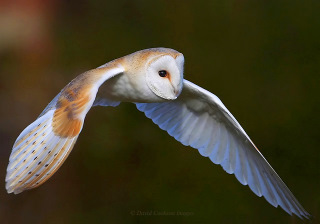
Couldn't close without another one of those 'can't resist this one' photographs showing the Barn Owl with its latest meal. Don't forget to take advantage of the link to BR's website....you won't regret it.


I have no idea why this post has a mainly white background, nor at this point do I have any idea how to get rid of it. What I do know is....I don't like it!

I'D SOONER BE BIRDING!

Sunday, 10 July 2011

The Corn Bunting.

Corn Bunting. Phil Slade

The Corn Bunting (CB) has a feeble flight and with its legs dangling it doesn't suggest a strong flyer, yet the species has at one time or another managed to colonise the remotest fringes of Britain. The CB owes much throughout history to mans alteration to the environment, the spread of cereal agriculture across Europe and reaching Britain a few thousand years ago resulted in the clearing of vast areas of woodland creating open habitats suitable for the CB.

In the north of its range the CB is largely confined to arable farmland, in winter the bird feeds mainly on cereal stubble a habitat which has declined greatly over recent years. In Lancashire the CB was uncommon towards the end of the 19th century and Mitchell commented it was 'very locally distributed and seldom seen except where grain is grown'. Today the reason for the dramatic crash of the CB - and the Yellowhammer for that matter - is unquestionably down to intensification and changes in farming methods which include the switch to autumn sowing of cereals with the subsequent loss of seed-rich stubble in the winter, and replacement of hay by silage, food supplies have also been depleted by the use of herbicides, pesticides playing their part  in the dramatic fall of the CB.

The CB is often referred to by some as a 'dull bird'. I personally don't know of a single species of bird I'd ever refer to as 'dull', but I do know if I'd like to see the CB in our recording area in north Lancashire I'll need a good deal of luck on my side, and if I do it'll be a 'straggler'. In our area 52 years ago in 1959 the CB was a scarce and very local resident, by 1997 it was declared as possibly extinct, today it most certainly is. However, just outside the border on Tuesday 18 January I recorded up to 100 CB's on Union Lane. Areas in south-west Lancashire and the Fylde are where the CB has a healthy status, that of a common breeding bird.

By the way, this I found both news and interesting, and if you're local....  

High Brown Fritillary. Steven Cheshire

....did you know about Myers Allotment and the High Brown Fritillary 

Tuesday, 8 February 2011

Satisfaction Guaranteed.


Well there's never really any guarantee but always a satisfaction to any birding as far as I'm concerned and today I had the company of JB, a birder who sees birding and wildlife in very much the same light as I do which makes our association all the more interesting.

Short-eared Owl. Pete Woodruff.

I only once had the opportunity to get a pic of the SEO with the sort of third rate photographic equipment I have today and this is the result from a couple of years ago. JB and I had excellent views of one of these brilliant creatures today quartering a field, the bird has been seen previously by us on 21 January.

Conder Green was a little on the quiet side this morning with nothing more than a single Goldeneye in the Conder channel below the railway bridge with another four on Conder Pool where I decided to become a recorder extraordinaire - well not quite -  for a few minutes and noted everything in sight, 5 Tufted Duck, 16 Wigeon, 32 Mallard, and 12 Mute Swans, in the creeks at least 80 Teal. A return visit on the way home produced a Greenshank and a Grey Plover.

I kept my recorders hat on at Glasson Dock and on the Lune Estuary noted estimates of, 5,000 Lapwing, 400 Redshank, 450 Dunlin, 465 Golden Plover, 45 Curlew, 36 Bar-tailed Godwit, 14 Black-tailed Godwit, a Spotted Redshank, 325 Wigeon, 29 Shelduck, and 3 Goosander drakes. Off Bodie Hill I noted c.120 Black-tailed Godwit and 4 Goldeneye drakes.

At Cockersands on my second attempt I finally caught up with the1st winter male Snow Bunting which - thanks to me freezing still when I found it - came within touching distance below the embankment overlooking Plover Scar. Also noted here, 2 Goldeneye drakes, and at least 90 Linnet at the set-aside.

On Pilling Marsh, 10 Whooper Swans, c.300 Pink-footed Geese (PFG), a Little Egret, and a distant Peregrine Falcon. At Fluke Hall, myself and about a half dozen other birders made no contact with anything amongst the c.1,500 PFG. Off Lancaster Road another c.4,000 PFG and 45 Whooper Swans seen, and a trip down Union Lane produced just 5 Corn Buntings.  

And finally....

Great-crested Grebe. Cliff Raby

Another reminder of the season to come. Thanks for this Cliff....excellent and much appreciated.

Friday, 21 January 2011

In and out of the soup!


Eagland Hill. Pete Woodruff.

For the first three hours we were in and out of banks of fog some of which came close to 'pea soup' thick and much worse than my pic shows, but it eventually cleared and made into a pleasant if cold day.

With JB/BT we first called in at Conder Green where we didn't move from the lay-by at the pool from where I noted 8 Little Grebe in the creeks, and 6 Wigeon on Conder Pool before we were off to Knott End where the tide was well in and was about to push the birds off the beach, but I noted c.20 Sanderling and 2 Wigeon on the sea which I thought quite unusual here, up to 50 Twite also off the esplanade.

In and around the Eagland Hill area we saw 2 Buzzard. On New Lane I saw at least one Reed Bunting, and a Brambling was with a flock of c.60 Chaffinch. On Bradshaw Lane a solitary Corn Bunting and 2 Stock Dove noted. On Taylors Lane, c.2,500 Pink-footed Geese (PFG). From Fluke Hall I watched 68 Whooper Swans (WS) come off Pilling Marsh flying south, and noted 42 Bar-tailed Godwit on the beach.

On Pilling Marsh I counted another 11 WS and a 'large' number of distant and many hidden PFG, and again saw the Peregrine Falcon perched on the same post as Tuesday. From Gulf Lane another c.20 WS distant inland and in the air, another c.2,500 PFG, a Buzzard, and a Little Egret fishing in a ditch.

I have no idea why, but we then went to Cockersands to spend three minutes at the lighthouse, followed by another three at the Caravan Park end, though the latter location gave us excellent views of the Barn Owl, we saw the Black Swan from Moss Lane which appears to have lost the company of the immature Whooper Swan which I've seen with it on two previous sightings recently.

Sparrowhawk. David Cookson

I have good reason to post the above brilliant image of the male Sparrowhawk....Thanks David. 

I was busy at the time but couldn't help overhearing a conversation on the radio this morning with a so called 'pigeon fancier' who was calling for 'getting rid of Sparrowhawks', this guy I understood to make two claims, firstly the birds are deemed by him as a 'pest' because of their habit of taking out Pigeons, and secondly he claims a policy is in place in Scotland whereby eggs are 'legally' removed from any nests found with the view that control is the way forward here....I think someone needs to have a word in this mans ear, if I knew who he was I would be more than willing to do that. 

Tuesday, 18 January 2011

Better than good!


A 'better than good day' today with JB who I guarantee enjoyed the birds we discovered just as much as I did.

But first.... 

Barn Owl. David Cookson

Yep, it's another one of those excellent photographs of the Barn Owl....can't get enough of these excellent photographs of Barn Owls. 

We first invaded some Fylde territory and at Knott End found a Dark-bellied Brent Goose roosting with Shelducks in turn roosting with estimates of 2,500 Oystercatcher, 250 Dunlin, 12 Bar-tailed Godwit, a single Black-tailed Godwit, and c.50 Knot. Also an adult Mediterranean Gull, and at least 15 Twite.

I took JB on one of my many routes during my 'car parts delivery days' through Out Rawcliffe, a decision which paid off handsomely with a pair of Barn Owl hunting, and the truly wonderful sight and record of at least 100 Corn Bunting in a tree on Union Lane. Also from here I counted up to 250 Whooper Swans distant from Lancaster Road which included at least 30 juveniles and probably many more, a count hampered by distance and hidden birds. At Eagland Hill, another count - hampered as above - of 12 Bewick's Swans with 88 Whooper Swans and just 10 Pink-footed Geese (PFG). 


Whilst at Eagland Hill this sign tied to a gate pleased me no end for all the right reasons.    

In the field opposite the entrance to Pilling Lane Ends c.180 PFG, and on Pilling Marsh another Dark-bellied Brent Goose was with at least 2,000 PFG. Also of note a Little Egret and another of those distant perched on a post hunting machines, the Peregrine Falcon. By now I'd been alerted to the bird I was alerted to yesterday, but I was confident this time it would still be there after we had called in to look over Bodie Hill to find 6 Bewick's Swans, c.80 Black-tailed Godwit, and 38 Goldeneye on the Lune Estuary. 

Green-winged Teal. Copyright Granted.

The Green-winged Teal above is the very bird still in the River Conder creeks at dusk this late afternoon and giving excellent views albeit being asleep for the short period I spent there on one of my rare 'twitches'.

And finally....not remotely connected with birds, not the feathered kind usually recorded and photographed on Birds2blog anyway!

Sarah Palin.
   
My flag counter informs me of my 382nd US Flag from Alaska. Could this new US visitor to Birds2blog be Sarah Louise Palin, American Politician and first woman Governor of Alaska, I very much doubt it but tell you what....I'm going no further down this political road for the time being!

Friday, 31 December 2010

The hat-trick.


I scored a hat-trick today, my third day in a row with a pleasant days birding with JB/BT to end a pleasant years birding as is always the case....what would I be without my birding!

Barnacle Geese. John James Audubon.

We first paid a brief visit to Freeman's Pools where a Roe Deer was soon seen, ears pricked and the staring eyes of a creature which hears and sees things a mile away. As noted in my post yesterday the pools remain frozen and deserted. On Aldcliffe Marsh 12 Barnacle Geese seen again with the c.650 Greylag I should have been able to see yesterday but could'nt, along with today's uncounted Canada Geese and surprisingly just 4 Pink-footed Geese.

At Conder Green it was good to find the Spotted Redshank not seen since the big freeze, 5 Little Grebe were all I noted here today which prompts me to point out, if you really need to see a fully comprehensive list of today's sightings then all you need to do is visit HERE to see JB's list, always remembering JB doesn't see all that I see, and I don't see all that JB sees and therefore our records don't fully tally.

At Glasson Dock on the Lune Estuary c.400 Bar-tailed Godwit were the only birds of note at a pretty void section of the river. On Jeremy Lane, 3 Whooper Swans including a juvenile. On Moss Lane, at least 350 Common Gull were of note. At Cockersands, c.90 Linnet still at/on the set-aside, 5 Black-tailed Godwit and a solitary Grey Plover posed the question....where are all the waders? 

Grey Partridge. Mike Watson

Thanks for the photograph Mike....On Gulf Lane it's always good to see Grey Partridge anywhere as we did here today in two coveys of eight and five. Pilling Marsh produced 3 Little Egrets - the first in many a days birding recently - with just c.120 Pink-footed Geese, and a smart little Merlin distant and looking not much bigger than a Mistle Thrush. At Fluke Hall c.6,500 Pink-footed Geese at close quarters allowed some detailed scrutiny.

BT's car seems to go into auto pilot from here every week and takes us to the feeding station on Bradshaw Lane where - whilst I tried to get to grips with a distant 'dark' raptor and failed to - JB recorded 8 Corn Bunting, 6 Yellowhammer, 30 Tree Sparrows and a Buzzard.

It was good to be out again with JB who surprised me to say it had been a month since he was last out with me....t'will soon be Easter John, and soon after that the summer with endless places to go to and endless birds to see. 

A HAPPY NEW YEAR TO ALL BIRDS2BLOG'ERS....Whoever and wherever you are.