BIRDING THE LUNE ESTUARY THE FOREST OF BOWLAND AND BEYOND........................................................................COMMON TERN CONDER POOL PETE WOORUFF

Sunday, 17 April 2016

Birding By Halves.

Better late than never....I'm putting last Thursdays birds on Birdsblog in two halves as I'm struggling with time at the moment. So here are the results of a Lune Estuary sortie which started in fine style, even though it proved me wrong....again!

A quote from Wednesday's post....'I have a distinct feeling it's not going to happen in 2016'....I was talking about the likelyhood of a Little Ringed Plover on Conder Pool this late spring, but my prediction was about to be proved wrong. 

I was hanging on to the hope of finding a LRP again this year, and looking excactly in the area where the birds had always been found in previous years there it was, Little Ringed Plover Conder Pool had delivered again

I'd noted the pool was quiet, but it was good to see the Gadwall pair still on here, though never seen out in the open yet, always lurking somewhere behind the islands, also 'the' lone Black-tailed Godwit here. I don't understand this bird, always alone and surely the same individual seen here numerous times throughout this year and last.

In the creeks, Spotted Redshank, a Greenshank, and 2 Common Sandpiper, with a few Redshank one of which was displaying. Legging it to Glasson Dock from Conder Green, 2 Great Tit, Reed Bunting, Goldfinch, Chaffinch, Robin, and House Sparrow....Not a migrant in sight and still waiting for my first Willow Warbler.


Black-tailed Godwit. Pete Woodruff.

On the Lune Estuary, c.350 Back-tailed Godwit, the photograph clearly illustrating the difficulty of counting birds on these stoney islands at low tide, there are at least fifty in the picture above. A 'few' Bar-tailed Godwit seen, 16 Eider is by far my best ever count on this section of the estuary where at best they are irregular, 4 Red-breasted Merganser seen recently were here still. During my 3 hour visit to the Lune Estuary maybe 8 Swallow went over heading north.


Black-tailed Godwit. Pete Woodruff.

Some of the Black-tailed Godwit were feeding close in, I did my best to capture the stunning breeding plumage most of these birds are acquiring. Hopefully the second half of Thursdays birding to follow when I can get to the computer.   

I'm grateful for some images Mike Atkinson sent me, including the excellent female Siskin header. 

Friday, 15 April 2016

Keep On Running!

Common Sandpiper. Pete Woodruff.

This was the limit of my photographic skills with two of the 3 Common Sandpiper which had turned up at Conder Green on Wednesday with more to come yet, but I imagine they'll all have moved on by the end of the April. Conder Pool was quiet, but the pair of Gadwall were still there, with 2 Snipe, 12 Tufted Duck, 28 Mute Swan, and at least 150 sheep with lambs on here now....say n'more. A Greenshank was in the creeks, and on the circuit 2 Dunnock, a Wren, Great Tit, and Robinbut no migrants seen.

A couple of hours at Cockersands yielded 10 Wheatear with only my second Swallow over the fields heading north, these were the only migrants seen. About 6 Tree Sparrow were around Bank Houses with Dunnock, Robin, and a couple of Skylark in the air. 

To do my birding full justice I should have checked out Plover Scar, but the 'doggie brigade' beat me there and put paid to any such chance....truck! Off the scar I counted 8 Eider, the same 8 Wigeon winter left overs, and 2 Great-crested Grebe.

As far as I could see, amongst c.30 Mute Swan distant from Moss Lane, I saw just 2 Whooper Swan remaining here, and on the day I saw 5 Small Tortoiseshell.

Garden Birds. 


Siskin Warren Baker

A pair of Siskin have visited our garden feeders again twice recently. Thanks for the image Warren, appreciated.

Wednesday, 13 April 2016

....And A Congregation Of Plovers.

Spotted Redshank/Redshank. Unknown.

In the creeks at Conder Green, the rapidly transforming Spotted RedshankIt was good to see last Friday's pair of Gadwall still on the pool again, with probably no more than 30 other birds, notable of which were a Snipe, 4 Tufted Duck, a Little Egret, and a fishing Cormorant not being a regular sight on here.

Raven. Martin Lofgren @ Wild Bird Gallery

Two Raven went over Conder Pool and put on a brief ariel display before continuing on their way, a check in the picnic area produced 6 Goldfinch and 2 Chaffinch.

On the Lune Estuary at Glasson Dock, c.350 Knot took to the wing immediately I spotted them and flew off downstream and out of sight, whilst 7 Eider flew upstream, up to 50 Black-tailed Godwit and similar Bar-tailed Godwit, with a Red-breasted Merganser seen. 

Greenshank. Antonio Puigg @ Pasión por las aves 

I decided to give Aldcliffe the shortened version of a visit and found a Greenshank on the marsh in company with a few Redshank. It took barely 10 minutes to scan the flood - now in brilliant condition - to find a congregation of 8 Little Ringed Plover there, also 4 White Wagtail, 8 Meadow Pipit, and a Little Egret.

I heard 2 Chiffchaff and saw 2 Reed Bunting during the time here, a pair of Gadwall, a pair of Shoveler, and a Snipe were on the now drying up 'wetland' otherwise more officially named the Wildfowlers Pool. Freeman's Pools were quiet, but 3 Goldeneye were still on here, and a few butterflies were at the east end but too fast and too far away for me though one gave itself up to be a Peacock

Little Ringed Plover.


Little Ringed Plover. Jan Larsson @ Vingspann 

My first Little Ringed Plover in 2015 were two birds on Conder Pool 7 April. I have a distinct feeling it's not going to happen in 2016, the pool is more likened to a lake again following the recent high tides which flood the pool, and I watched a Lesser Black-backed Gull on here thrashing a large crab about with it's bill.

Thanks to ML/AP/JL for their excellent photographs, they are much appreciated, and were much needed to give Birds2blog a bit of lift. 

Monday, 11 April 2016

The Appliance Of Science.

Black-tailed Godwit Martin Jump


Martin Jump was it touch recently to tell me about the image of a Black-tailed Godwit the likes of which he'd never seen before, and that he found the image whilst looking through some of his stock files. After Martins explanation of the circumstances and the image he sent me, I told him this was new to me too, and that he had been photographing this bird just at the precise moment in time to catch this amazing shot as evidence of the behaviour of this individual. 

So I did some research and found that Distal Rhynchokinesis is a little known phenomenon related to the ability of shorebirds to open up the tip of the bill to be able to feed in mud, silt, or soil.


Snipe. Howard Stockdale. 

Some further searching lead me to Howard Stockdale who has excellent photo documentation of a Snipe showing side on the gradual change in the upper mandible shape.

This is all fascinating stuff, and thanks to Martin for getting in touch and drawing my attention to it, and to Howard for allowing me the use of his sequence of the Snipe.

Summary.

'The use of Distal Rhynchokinesis (DR), which consists of the movement of the distal part of the upper jaw with respect to the cranium, is well documented in long-billed shorebirds (Scolopacidae), commonly being associated with the deep probing feeding method. However, the functional and evolutionary significance of DR and other cranial kinesis is unclear. We report for the first time the use and occurrence of DR in wild long-billed shorebirds feeding on small prey items suspended in water. We tested whether prey size in captive Dunlins Calidris alpina influences the occurrence of DR during feeding and also whether its use affects foraging efficiency. We found that wild Dunlin, Curlew Sandpiper Calidris ferruginea, Sanderling Calidris alba and Little Stint Calidris minuta commonly use DR to strike, capture and transport small prey items. Prey size influenced the occurrence of DR during the transport phase, with this type of cranial kinesis being more frequently used with larger prey. The rhynchokinesis protraction angle (a measure of bill tip elevation) during prey strike and transport was affected by prey size, and bill gape was modulated through the use of DR in relation to prey size. Finally, the use of DR throughout intra-oral prey transport was related to shorter transport times, which improved foraging efficiency. We conclude that DR is a mechanism that could contribute to the flexible feeding behaviour of long-distance migratory shorebirds, enhancing small prey profitability and so improving foraging efficiency, and may have played a role in the evolutionary radiation of Scolopacidae (Charadrii)'....This summary is taken from a lengthy and scientific page on Distal Rhynchokinesis Here 

I'd sooner be birding!....And that's what I'm about to go and do right now, but to be honest too windy on the coast for my liking.

Saturday, 9 April 2016

Little New....

....on the migrant front yesterday, but a nice bit of enjoyable variety around. 

Gadwall. Bob Bushell @  Birdsfod 

A pair of Gadwall on Conder Pool were at least unusual, with 14 Redshank and 8 Tufted Duck to note, everything in sight put to flight at the sight of a Sparrowhawk flap flap gliding through. The Spotted Redshank was again the first bird I saw at Conder Green when it was in the creeks and almost half way to becoming black as the devil's waistcoat. A Song Thrush was a nice bonus here today alongside 2 Robin.

On the Lune Estuary, not every day you see 12 Eider on the River Lune at Glasson Dock, they were all hauled out as was a drake Red-breasted Merganser. A single Goldeneye took me by surprise as it rocketed downstream, I had thought they had all gone, and just 12 Black-tailed Godwit here. At least 50 Shelduck were on Colloway Marsh, and c.20 Sand Martin were over the canal basin, soon moved off north, and I saw 2 Long-tailed Tit here.

At Cockersands, little more than 20 Whooper Swan remain here now. The tide was at it's height and along the headland I saw the one Wheatear. At Bank Houses horse paddock, 5 Tree Sparrow, a single House Sparrow, 3 Blackbird, and a Great Tit, 2 Skylark on the circuit, with 11 Curlew at rest in a field, and off Slack Lane, c.450 Golden Plover have taken a liking to the flooded field now considerably drier, along with c.50 Ringed Plover and 20 Dunlin. In an Abbey Farm field I counted an excellent 18 Brown Hare.

The Plume Moth.

20-plume Moth. Pete Woodruff.


This 20-Plume Moth was found trapped in our bathroom where I photographed it in the window, then released it back into the garden where it belonged.

The English name of this unusual little moth is inappropriate as each wing is separated into 6 plumes, the scientific name - Alucita hexadactyla - is more accurate and means six-fingered. It is the only British member of its family and is fairly common, it can be found at almost any time of year.

Thanks to BB for his drake Gadwall, and thanks to DC for his 'Stoney' header, both excellent and much appreciated images. 

Thursday, 7 April 2016

What A Difference A Day Makes.

Following some action by one or two migrants for me on Monday, the following day was much more subdued, so much so that I saw little action at all, such is the unpredictability if birds.

The Common Sandpiper put in an appearance and was on Conder Pool, with the lone Little Grebe left behind on here by it's wintering brethren, 2 Snipe were on 'Tern Island', 16 Redshank were roosting, and a few Sand Martin and Swallow went over. On the Lune Estuary, estimates of 350 Redshank feeding close in from the bowling green, whilst 50 Dunlin were on the far side of the Conder mouth, with 20 Black-tailed Godwit noted, 4 Red-breasted Merganser seen here again.


Golden Plover Jan Larrson 

At Cockersands, I saw up to 350 Golden Plover high in the air and changing directions until I lost them to view, two hours later I counted 105 Golden Plover quietly crouched in an Abbey Farm field. At Bank Houses horse paddock, 6 Tree Sparrow, and 4 Blackbird. On the circuit I heard a Skylark in it's never ending flight song, and saw just one Meadow Pipit.

Lapwing Brian Rafferty 

It's on days like this you realise the status of some of the UK's birds, in particular today's farmland birds and the breeding Lapwings at Cockersands, where those in at least one field here have already lost their first breeding attempts to agricultural 'activities'....
Ahhhh well, I suppose we'll be expecting our Corn Flakes and dozens of other consumer options for the choosing on the mile long shelves at the supermarket next time we go there!

Wednesday, 6 April 2016

Curtain Up!

Chiffchaff Warren Baker

The curtain went up on Monday for my small share of some of the summer migrants when the first one seen was a Chiffchaff in song from the coastal path at Glasson Dock, it was soon followed by at least 40 Sand Martin over the canal basin at Glasson Dock. My first Chiffchaff in 2015 was at Conder Green on 13 April, and the first Sand Martin were six birds over Conder Pool on 7 April.

On the Lune Estuary, c.150 Redshank and 50 Dunlin were feeding close in as the tide dropped, and 4 Red-breasted Merganser included some display by the two males throwing their heads back.

I found 2 Spotted Redshank in the creeks today along with the Common Sandpiper, this bird will no doubt soon be joined by it's relations on their way to breeding grounds. In 2015 the last Common Sandpipers at Conder Green were 4 seen on 1 May, with the first returning bird back here about six weeks later on 18 June. Fourteen Redshank were roosting on Conder Pool. 

White Wagtail Noushka Dufort 

At Cockersands, 2 White Wagtail were in stubble behind the Lighthouse Cottage, off Crook Farm, c.450 Black-tailed Godwit, and off Plover Scar 7 Eider noted. In the area of Cockersands Abbey, 5 Wheatear were seen. 

I reckon the count was down to little more than 20 Whooper Swan on Monday, they were in the same fields they've been in since mid-January where they have been difficult to assess this winter, always spread out from Moss Lane as far down the fields to Bank End, but according to my records they peaked at c.400 on 3 March, I reckon possibly the all time highest count of Whooper Swan in our recording area. 

Garden Birds.

Siskin. Peter Rhind.

A male Siskin again and 2 Greenfinch were on our feeders yesterday, with thanks to PR for the Siskin which was in his garden the same day.

Thanks also to Warren and Noushka for today's other images, excellent and much appreciated.

Monday, 4 April 2016

Bird Of The Day.

With blogging time allowance for me at the moment virtually non existent, here's today's bird of the day, the rest may have to wait until Wednesday to be reported.

Water Pipit. Conder Green 4 April. Pete Woodruff.

Bird of the day today was the Water Pipit giving excellent views on the stones in the creeks at Conder Green. The bird was in near summer plumage showing it's blueish-grey head and pale supercilium, virtually unstreaked below, the peachy tinge to it's breast showed nicely.

What a pity I didn't do better with my photographic attempts, from six shots this was the best I could do, but as record shots go....maybe not too bad.

Sunday, 3 April 2016

Then There Were None.

It was one of those one off days in spring on Thursday, when we get a nice sunny calm day which has you realise it's that time of year. I was off to Harrisend, reluctantly because I thought the most part the lower end of the fell would be one huge sponge needing wellingtons to cross the run off ditches, as it happens I managed to cross them with some detours and care.

Despite receiving e-mails from contacts about Stonechats at various locations in Bowland, I found not a single bird on Harrisend and can't pretend not to have been disappointed at that. It will be interesting to get on Clougha and Birk Bank, hopefully to find this is not going to be the case up there again this year.


Meadow Pipit. Antonio Puigg @ Pasión por las aves

Otherwise Harrisend was all a bit bleak, though at least 30 Meadow Pipit were easily counted, with lots of chasing one another around, a lone Buzzard was soaring above, a Kestrel hovering, a Curlew was heard with it's fluty, melancholy whistle, and a Wren heard delivering it's amazingly loud song.

On Hawthornthwaite I soon picked up a distant Stonechat which was put up by two people ahead of me on the track, after they had disappeared into the wilderness so had the bird and I never saw it again. Another soaring Buzzard and hovering kestrel seen, 2 Red Grouse, at least 8 Meadow Pipit, 7 Pied Wagtail, and a Curlew, 2 Brown Hare are the first I ever saw here, in fact I don't have any previous records to mind in Bowland, but I read on a website....'the upland pasture fringe of the Forest of Bowland seems to be an important habitat for them'....that's news to me, must find out more.


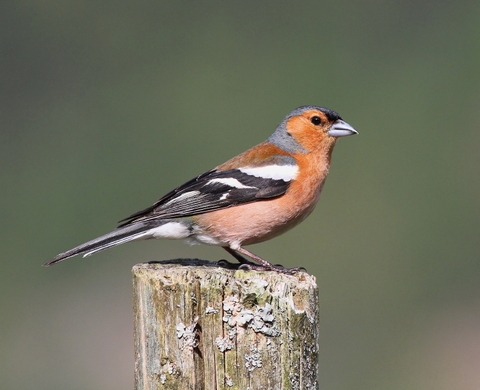
Chaffinch.Warren Baker @ Pittswoodpatch 

The feature of a brief visit between the woodland strip and the plantation behind Tower Lodge was that of 8 Chaffinch, with 3 Robin, and a Great Tit all that was on offer. My third Buzzard of the day flew across as I approached Jubilee Tower on the way back to Lancaster.

Stonechats in Bowland.

It was hardly the most exciting of birding days for me on Thursday, but great stuff all the same, though too early in the year for anything conclusive about the Stonechat in Bowland. However, the species still hadn't returned to Harrisend last year in anything like the numbers of the past, and looking back through records over the past ten years, I found nine Stonechat on Harrisend on 5 April 2007, and in fact had a peak count of 12 Stonechat later in the season on 2 July, they were seen as 3 pairs and 6 juvenile. Last years breeding season on Harrisend was at least decent, with 8 birds seen as 2 pairs with 2 juveniles on 4 September.

With thanks to Antonio and Warren for their excellent images, and to Ana for the Ring Ouzel header image, brilliant bird, brilliant image....WOW! 

Friday, 1 April 2016

Seek And Ye Shall Find....

....didn't work for me on Wednesday!

Swallow Simon Hawtin

But I did see my first Swallow of the year when a single bird flew north and low across the field as I walked beyond Bank Houses at Cockersands, otherwise, it was a 'migrants what migrants' day....I didn't see my first Swallow last year until 13 April at Glasson Dock.

On Conder Pool....surprise, surprise, a Little Grebe still on here, my first since 15 March since when I thought they had all departed, though my last one on Conder Pool in 2015 was on 14 April. A Goosander was hauled out, a single Black-tailed Godwit and a few Redshank included some display behaviour.

On the Lune Estuary, c.150 Golden Plover were well camouflaged on the mid-distance weed covered shingle, c.50 Black-tailed Godwit, a drake Shoveler was interesting with the remaining c.100 Wigeon here, and a Red-breasted Merganser noted.

More desperation set in with me again at Cockersands, c.250 Golden Plover were flighty over the Abbey Farm fields, and believe it or not, a single Greenfinch and Meadow Pipit were the only passerines to catch my eye.

Apparently.... 

The 18 January Lune Estuary Little Stint put in it's sixth appearance yesterday, it was seen from the Conder Green car park at high tide. Thanks to IH - his third sighting - and RBA for 'Getting The News Out'.


Siskin. Noushka Dufort @ 1000-Pattes 

And some excellent news from our Lancaster garden yesterday was that of a smart little male Siskin on our feeders again, follows five here on Sunday morning 13 March.

Thanks to Simon and Noushka for their ever excellent images.

It's April now....Let the show begin!