BIRDING ON THE LUNE ESTUARY AND THE FOREST OF BOWLAND......................................................SPOTTED REDSHANK/GREENSHANK CONDER POOL PAUL ELLIS

Tuesday, 15 February 2011

Can't bird from a car!

Well you can't bird from a car but in fact I found some decent birds today from one. But first, here's a little beauty from Egypt....

Greater Sand Plover. Phil Slade

A smart little wader photographed by PS who thought he'd go there to help rid the country of its leader but found he wasn't required so had a holiday instead. 

Conder Green remains quiet but 2 Spotted Redshank, and 4 Little Grebe were in the channel and 5 Goldeneye on Conder Pool, a Kingfisher was a pleasant surprise flying off down the channel which has produced the Common Sandpiper recently. The first Kingfisher since 'the big freeze' and makes you wonder how these birds cope and survive in such conditions, remembering they have the need to fish in still - or at least quiet running - clear waters....amazing!

The Lune Estuary at Glasson Dock offered nothing to add to yesterdays birds save a larger number of 'gulls' amongst which I found a smart adult Mediterranean Gull. On Jeremy Lane 3 Whooper Swans were with c.24 Mute Swans. From here the rest of my birding for today was indeed done from a car and seeing a large group of 'swans' from the A588 opposite Sand Villa I pulled in to a gateway to find 19 Bewick's Swans and 8 Whooper Swans, an excellent record for the former.

Pilling Marsh was pretty well deserted but I did see a Little Egret distantly in flight. From Backsands Lane a Ruff was with a miserable count of 9 Golden Plover and a 'good number' of Lapwing. From Fluke Hall Lane another Ruff found in the stubble field currently in excellent condition....well, excellent for birds. At Fluke Hall my day ended nicely with a male Stonechat for company through the windscreen whilst I had a 'cuppa'. 

And finally....

Striated Heron. Phil Slade

Another Egypt special with thanks to PS for allowing them on to Birds2blog.

Monday, 14 February 2011

T for two!


The titles get worse.

I had just two hours to give to my birding today - isn't life exciting at times - and managed to give CG and GD as good a going over as possible in the time allotted. But to add a little colour and interest to the blog I first have to post a pic....


And I'm fortunate to have access to many excellent ones like this female Pintail showing some brilliant plumage detail.

Well the visit to Conder Green got off to a sluggish start when I had to sit out a heavy shower on my arrival with thoughts of 'Oh no not again' going through my head, but it cleared and the first bird found was last Thursdays male Stonechat, soon followed by the Common Sandpiper which - if you'd really like to see this bird - you'll need to look around for it as it gets about some, my last three visits have found it in the channel as you approach the right hand bend by the Caravan Park. The Conder channels were again void of any waders and in fact the circuit was void of anything of note. Conder Pool held 3 Goldeneye and 12 Wigeon to note. From here I saw c.250 Pink-footed Geese in the air over Jeremy Lane.  

On the Lune Estuary at Glasson Dock I first checked the small group of 'swans' which turned out to hold 2 Bewick's Swans, a Spotted Redshank was soon found and the other 'estimated' wader counts went.... 5,000 Lapwings which I saw on Tuesday 8 February, 650 Redshank, 350 Golden Plover, 265 Dunlin, 245 Bar-tailed Godwit, 2 Goldeneye, 2 Little Grebe, and 3 Goosander.

And another pic....

Shoveler. Brian Rafferty

The drake Shoveler also shows some excellent plumage detail and I'm grateful once again to BR for allowing the photographs on Birds2blog.

MEGA NEWS.

A Rufous Turtle Dove (form orientalis) has been found today at Chipping Norton - it's been here before - in Oxfordshire. The bird is apparently in the garden at an address I don't think I'm entitled to publish here, but the instructions are not to park at the address but in the town centre and walk to it, you're allowed 5 minutes for viewing at this location at the cost of £5 per person and a queuing system is in operation, and if you go to see the bird on Wednesday and Thursday you'll be out of luck as there will be no access....Mmmmm!

Saturday, 12 February 2011

The Great Auk.


The Great Auk is shown in the brilliant artwork of Thorburn, centre bottom in the plate below. 

Auks. Archibald Thorburn.

The Great Auk was a flightless North Atlantic sea bird, ancient remains of which have been found to prove it occurred  in the North Atlantic and Northern Britain for a considerable period of time. The bones of three adult birds were found below Viking level at the Jarlshof settlement, Mainland Shetland. In 1549 it was mentioned as being found on the Western Isles, and 240 years later in 1789 a Great Auk was said to have visited St Kilda. Bones found in old sea caves at Whitburn proved that it frequented the British coast, but by the mid 19th century it was on the verge of extinction which eventually came about through the activities of human hunting and persecution....The story of its last sighting gave me a distinct feeling of nausea.


Five men  - which I can only describe as idiots - came across a sleeping Great Auk on Stack-an-Armin, St Kilda in July c.1840. One of these men  - who were completely immersed in the beliefs and superstitions of the time - grabbed the bird by the neck and proceeded to confine the creature in a *bothy for three days. The bird was suspected of being a master of wind and weather and was blamed for causing a violent storm, it was cruelly clubbed to death with a large stone in a prolonged attack....executed as a witch! It was the last Great Auk to be seen alive in Britain. 

*A small hut or cottage for use as a mountain refuge.

Friday, 11 February 2011

Hunting With Eagles.


It may be three days before I get out birding again so meanwhile, please take a look at these two 'whats this got to do with birding' videos. I personally have some reservations about this first one, but who am I to want to see an end to age old traditions but....shouldn't the Eagle be Wild and Free.


This one is a short sneaky look at the new Madagascar series, the music might annoy you....it did me!


I'D SOONER BE BIRDING!

Thursday, 10 February 2011

Hard at times!


It was a bit hard at times today and if the fog had been forecast I didn't know it had been, it played a major part in disrupting my efforts for a couple of hours at Conder/Glasson, followed by more than a couple at Morecambe around the tide again....but I did my best. Be warned there are three 'so whats this got to do with birds then' photographs to follow the one below, all credited to yours truly. 

Wood Pigeons. Logging off at Conder Green! 

Although it was hard work at times because of the fog my day was already made up ten minutes out of the car at Conder Green when I found a male Stonechat in the horse paddock on the left just past the Stork Hotel, almost certainly SP's 29 January bird. The place was virtually void of any waders today and the circuit produced just 4 Goldfinch, 2 Reed Bunting, and a Song Thrush heard in good song only. On Conder Pool, the Jeremy Lane of late  immature Whooper Swan was with 8 Mute Swans, also 4 Goldeneye noted. 

On the canal basin at Glasson Dock, 10 Goldeneye and a Great-crested Grebe. The Lune Estuary was almost blocked out by the fog but I managed to filter through it to find a Spotted Redshank, counted at least 100 Golden Plover, and 3 Goosander drakes through the murk. At Bodie Hill the fog lifted temporarily to see Tuesdays 120 Black-tailed Godwit and - surprise,surprise - a Little Egret on Glasson Marsh....long time no see here! On Jeremy Lane the Little Owl seen.

At Morecambe by 1.30pm I was confident the day had improved to become sunny but I was proved wrong and the fog banks kept coming and blotted out anything offshore rendering the birding a bit of a half hearted affair. But at Teal Bay where the tide was pushing the birds out of the fog and into view I noted 720 Lapwing 650 Curlew, 96 Bar-tailed Godwit, 75 Wigeon, 24 Eider, 6 Goldeneye, and 3 Great-crested Grebe, a Peregrine Falcon passed by at least twice.


This was what turned out to be the last fog bank to pass through Morecambe as seen from Broadway where I counted 120 Turnstone on the groyne, an excellent count for the species.


By the time I reached the Stone Jetty it had become a spring like late afternoon, thought the birding had fallen flat on its face unfortunately, but....


LR66 was looking good again in the brilliant sunlight and flat calm sea.

Wednesday, 9 February 2011

One or two bits!


A bit late this evening for posting and not having got any birding in today, nothing to report. However, you may have seen in my post on the Wheatear and my commenting the males will have already left their wintering quarters in Africa and that birds could be seen on the south coast by late February....a bit of an understatement if the report I got this afternoon can be found to be genuine when two Wheatears were seen today near Halton Lea Gate, Midgeholme, Cumbria.

Swallows. Cliff Raby

Well the Weatears in Cumbria may well be early but the sign of things to come like the Swallows above will need a little more time before we can witness this kind of amazing spectacle....Pretty impressive stuff Cliff and thanks a bundle for allowing them on to Birds2blog for us all to enjoy.

Blackpool Storm. Peter Guy.

So whats this got to do with birds then, obviously nothing it's just a brilliant piece of photography taken last week at Cleveleys with my thanks to PG.

And finally, I just watched David Attenborough's new three part series 'Madagascar'....if you missed it thats unfortunate and I strongly recommend you try to catch up with it if you can as it is excellent, and if you can receive it in HD....WOW!

Tuesday, 8 February 2011

Satisfaction Guaranteed.


Well there's never really any guarantee but always a satisfaction to any birding as far as I'm concerned and today I had the company of JB, a birder who sees birding and wildlife in very much the same light as I do which makes our association all the more interesting.

Short-eared Owl. Pete Woodruff.

I only once had the opportunity to get a pic of the SEO with the sort of third rate photographic equipment I have today and this is the result from a couple of years ago. JB and I had excellent views of one of these brilliant creatures today quartering a field, the bird has been seen previously by us on 21 January.

Conder Green was a little on the quiet side this morning with nothing more than a single Goldeneye in the Conder channel below the railway bridge with another four on Conder Pool where I decided to become a recorder extraordinaire - well not quite -  for a few minutes and noted everything in sight, 5 Tufted Duck, 16 Wigeon, 32 Mallard, and 12 Mute Swans, in the creeks at least 80 Teal. A return visit on the way home produced a Greenshank and a Grey Plover.

I kept my recorders hat on at Glasson Dock and on the Lune Estuary noted estimates of, 5,000 Lapwing, 400 Redshank, 450 Dunlin, 465 Golden Plover, 45 Curlew, 36 Bar-tailed Godwit, 14 Black-tailed Godwit, a Spotted Redshank, 325 Wigeon, 29 Shelduck, and 3 Goosander drakes. Off Bodie Hill I noted c.120 Black-tailed Godwit and 4 Goldeneye drakes.

At Cockersands on my second attempt I finally caught up with the1st winter male Snow Bunting which - thanks to me freezing still when I found it - came within touching distance below the embankment overlooking Plover Scar. Also noted here, 2 Goldeneye drakes, and at least 90 Linnet at the set-aside.

On Pilling Marsh, 10 Whooper Swans, c.300 Pink-footed Geese (PFG), a Little Egret, and a distant Peregrine Falcon. At Fluke Hall, myself and about a half dozen other birders made no contact with anything amongst the c.1,500 PFG. Off Lancaster Road another c.4,000 PFG and 45 Whooper Swans seen, and a trip down Union Lane produced just 5 Corn Buntings.  

And finally....

Great-crested Grebe. Cliff Raby

Another reminder of the season to come. Thanks for this Cliff....excellent and much appreciated.

Monday, 7 February 2011

Coming Soon!


Wheatear. Pete Woodruff.

No other bird heralds the spring for me more than the Wheatear and I look forward to finding my first one of 2011 in early March when I start looking seriously at places like Cockersands where I've found most of my first Wheatears in the past.

The spring migration of this bird is quite a protracted affair and the first migrants of oenanthe will by now have already left their wintering grounds with the males on average leaving a week or two before the females, in exceptional cases some of these male birds could be found on the south coast by the end of this month. Incidentally, birds of the 'Greenland' race leucorhoa undergo what is probably the longest transoceanic migration of any other passerine.

Today breeding in the UK is chiefly on altitudes above 300m in Scotland, northwestern and southwesten  England, Wales, and western Ireland, but Oakes described the Wheatear as a mossland breeder, claiming them to be holding their own on several mosses into the mid-twentieth century, he eventually blamed increasing urbanisation for a decrease on the Fylde and Sefton coasts where none nested on the latter dunes after 1955 and with no reported breeding on the mosslands in more than 25 years. The Carnforth slag tips - which have laid claim to fame with a Shorelark there recently - was a long-established colony with nearly a double figure of Wheatear pairs breeding there in the 1980's which had declined to two during 1998-2004.

The last sighting of Wheatear has usually been made by the end of October, but records of birds in late November are frequent and include one seen at Sunderland Point on 24 November 1985, a sighting only surpassed by one seen at Rossall Point three days later in the same year on 27 November. I'll be on the lookout in a few weeks time, though if 2010 is anything to go by it will be 23 March when I found three birds on Clougha at over 300m....perhaps birds already on territory by then.

And finally, an excellent pic and a couple of notes....

Snow Bunting. David Cookson

I keep coming across 'photographs with a difference' lately and this one of the Snow Bunting is no exception....Brilliant David and many thanks. 

MEGA NEWS.

The Slaty-backed Gull had turned up again yesterday at Hanningfield Reservoir in Essex but not seen since. Today a Belted Kingfisher - a common waterside bird throughout North America - was found at Co. Derry, 10 miles SE of Londonderry.

Saturday, 5 February 2011

Ready made gap fillers!


There's always some excellent 'gap filler' material on the Internet when I look for it between my birding days, and it's also often easy to find local and quite appropriate stuff for Birds2blog as the link which follows illustrates. If you'd like to see some pretty amazing....stunning....and excellent photography - including the familiar name of David Cookson - all you need to do is click Photo of the Year 

Although a little further afield this one created some interest for me and if you're a Dragonfly enthusiast it'll interest you too.

And some birds from even further afield can be seen here in....

Friday, 4 February 2011

Mr Parker....fully charged!


Plus a 'chat' an 'owl' and a 'duck'.

But first I think you should take a look at this about the very nice Mr Parker, bearing in mind there are of course no convictions yet and being acquainted with the law of this land of ours who knows what'll happen, but as far as the story goes so far You'll like it ....well you should do!

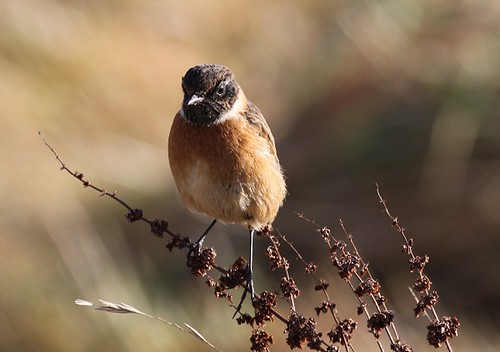
Stonechat Conder Pool
Stonechat. Copyright Granted.

Another fine image of a male Stonechat which escaped from Conder Green without my knowing it had ever been there on 29 January.

The Short-eared Owl (SEO) in our area of Lancashire is a scarce upland breeding bird and winter visitor which finds itself on the Amber List as a Species of European Conservation Concern. I get the impression they are a little thin this winter but I was lucky enough to find one in the mist and murk of 21 January in the Rawcliffe area.

This bird breeds chiefly on heather moorland from Staffordshire to the Pennines and north to Scotland where it is absent from the highest parts of the north and west. It breeds in the Outer Hebrides on the Uists - but not on Lewis or Harris - and Orkney, but not on Shetland. The SEO has a need for short vegetation which is rich in small mammals with which the populations of the bird fluctuate with vole cycles, therefore the more abundant the voles, the more successful the owls. In Oakes time they were regular breeders in areas in Bowland and he names Ward Stone amongst them, he refers to the bird as 'a very scarce and local resident, though formerly known as a breeder on coastal mosses including Cockerham and Winmarleigh'.

As is often the case - very nearly always in my view - if you read about the histories of birds of prey you will come across the causes of highs and lows in their fortunes being attributed to humans, in particular the lows which are usually connected with persecution. How little things have changed over the years - though once again in my view - have done so for the worse in many respects which brings us nicely back to the lovely Mr Parker who - if you don't mind my reminding you - is not just a gamekeeper....but the bloody head one.

There are no ringing recoveries outside the UK but known data indicates that  large numbers of SEO's come to GB during the winter many of which are from Fennoscandia and eastern Europe as far as Russia.

And finally....


Yet another of those 'out of the ordinary' pics with the drake Wigeon coming in to land....really appreciate this Brian.