BIRDING ON THE LUNE ESTUARY AND THE FOREST OF BOWLAND......................................................SPOTTED REDSHANK/GREENSHANK CONDER POOL PAUL ELLIS

Friday, 11 January 2013

The Black Stork.

In 1992 when I applied for the job as a car parts delivery driver and was eventually successful in it, I had no idea I was about to become one of the luckiest birder in the UK. As you can imagine the job took me through prime birding country all points on the map, taking me through areas covering many miles, south to Preston, to Blackpool in the west, Hellifield in the east, and Kendal in the north. Quite periods over the years had me spending many hours birding and getting to know the birds on a daily basis and was the means whereby I first discovered the upturn in the status of the Stonechat in 1999 when I noticed them seen with more and more regularity on Newby Moor near Clapham, an area which was to become a stronghold for the species and where I found twelve birds on a cold winters day in November 2000....But the rest of this 'car parts delivery' story I'll leave for another time.

Black Stork. Copyright Bury Antoine.

My day at work on 24 April 1995 was going to be one to remember and I'll always recall being on a road I really shouldn't have been on to be honest, more to the point I was supposed to be back at base loading up for my next run.

But wait a minute....this large bird in the air flying parallel to the road I'm driving along and about to drop below electric cables suspended from pylons, is unmistakable as being a Black Stork (BS) which I saw precisely as the bird looks in the photograph above. The only disappointment now, is that I can't linger here very long at the peril of loosing my job, but I'm on the phone now to get the news out about this excellent find. 

It transpired that a farmer had seen this bird in one of his fields the day before my sighting and described it as....'looking like an Oystercatcher on steroids'....Well that might have seemed funny to him, but right now this was a serious and exciting business to me. The bird flew on and up the Quernmore Valley and a second hand rumour had it that it was seen on the Lune floodplain later that day. The following day 25 April, a BS was seen in Ennerdale in Cumbria and was thought to have been the same bird, another day later - April 26 - a BS was reported in the Bolton Abbey area and was presumed to be the same Quernmore/Ennerdale bird once again. 

Two months later there was another report of a BS flying east over the south of Lancaster on 30 June but no description or documentation was forthcoming on this one and so was lost to history.

Wednesday, 9 January 2013

Thick Fog....Thin Birds.

Unusually for me when it comes to the weather, I set off this morning full of optimism for some serious birding to get to grips with what's about in the Lune Estuary area, but arriving at Conder Green it was apparent my weather pessimism would have been more fitting. I was intent on giving this area a good six hours justifiable birding and that's what I was going to do, but.... 

Conder Pool. Pete Woodruff. 

This was the welcoming sight looking south over Conder Pool....

Conder Pool. Pete Woodruff.

And this was the welcoming sight looking west, and for the following six hours little changed and I recorded just seven species....I call that rough justice.

But things actually started well in the gloom of Conder Green because the first two birds I found were a Greenshank and Spotted Redshank together, these were to be the first of two more excellent finds today and a perfect photographic opportunity for anyone so inclined. 

Cockersands. Pete Woodruff.

Having discovered as expected Glasson Dock was no different I went off to Cockersands full of hope the fog would lift eventually, but it was just a dream and there was no change four hours later having walked from Crook Farm to Bank End Farm....

Black-tailed Godwit Paul Foster 

....but on the return through the murk I could see what I thought was a field with a good number of Curlew, but putting the telescope on to them I found them to be a count of at least 255 Black-tailed Godwit....excellent find No 2. When I got back to Glasson Dock the fog had lifted but only slightly and I could pick out 8 Goldeneye on the canal basin. The Lune Estuary from here wasn't a wash-out, it was a fog-out. 

Thanks for the Black-tailed Godwits Paul, much brighter birds in their summer finery than mine today in their foggy winter finery. 

By now with the time 3.15pm, not only was it foggy but the light was fading fast so I made a hasty return to where I had started at Conder Green six hours ago and where excellent find No 3  was waiting to be discovered. Eleven Little Grebe were here, with four on Conder Pool and seven together in the creeks where the Common Sandpiper presented itself for me once again. 

Waxwing David Cookson

A quick look on the coastal path just beyond the old railway bridge and the roaming birds present in the area a day or two now were sat quietly in a bush in the form of 8 Waxwing....Excellent find No 3.

Thanks for the Waxwing David....Brilliant.

And a good days birding was had after all despite the thick and thin of it!....Did you 'clik the piks'?   

Tuesday, 8 January 2013

The Squeeze!

I managed to squeeze in two hours yesterday between all the other needs for the day, but as it turned out I'd probably have headed off back home by lunch time as guess what....it rained.

Conder Green didn't turn up anything you'd call a surprise but it was good to find the Common Sandpiper once again lurking in the hidden corners of the creeks, this bird often needs to be looked for, it is a small unobtrusive bird which blends in with the muddy banks and often flies off like a little rocket with its rapid wing beats. Also noted on the quiet Conder Pool, 3 Little Grebe, 16 Wigeon, and a pair of Tufted Duck, a Little Egret was seen on the marsh opposite the viewing platform before disappearing into a channel.


Lapwing Noushka Dufort

Give yourself a little counting test and take a glance at the picture of the Lapwings before you actually count them.

Having taken note of the numbers of waders on the Lune Estuary from the old railway bridge at Conder Green, I arrived at Glasson Dock to view from the bowling green where those birds are out of view round the bend in the river, I soon reckoned up to 10,000 waders present here today which included estimates - round figures again - of 7,000 Lapwing, 2,000 Golden Plover, 500 Dunlin, 30 Bar-tailed Godwit, and 3 Black-tailed Godwit. I also took note of 12 Goldeneye and 2 Little Egret. On the canal basin 5 Goldeneye and 2 Little Grebe were of note, and its raining now, in any case I needed to be back in Lancaster by 12.30pm.  

Albeit a dull and dreary morning it was good to escape routine for a couple of hours to look for and check out the birds of the Lune Estuary at Conder Green and Glasson Dock.

Now these two are an absolute must....


This photograph has to be amongst the top ten of 'pics with a difference' and is an out and out winner in my book....Brilliant.

Stonechat Sharon Whitley

And hey....this is Birds2blog, this is Pete Woodruff, and this is a picture of a Stonechat. But not just a picture, a painting, and here's that word again....Brilliant.

Thanks Noushka, Martin, and Sharon, you helped add some interest and put Birds2blog on the map again!

Sunday, 6 January 2013

The Not So Happy New Year Has Arrived....

....Well at least the first bit of bad news for 2013 has come to my attention, and in using Birds2blog as my platform I'd like to share it with you just in case you didn't already know.

But please note this is going to be brief, and several hundred words shorter than it could be. I also have no intention of naming names, or slagging off political parties....not this time anyway!


Hen Harrier. Copy Permitted.

By the end of March funding for the National Wildlife Crime Unit (NWCU) may well come to an end, but to be positive about this 'people power' has won the day before and can hopefully do so again if we all protest to this withdrawal of a paltry £136,000 to help the law to protect our birds/wildlife. I've written to an MP about this to ask if he has signed the Early Day Motion (EDM) on this issue and I'll post negative replies on here if I get any. 

I've always strived for, and wanted to be referred to as a birder in the true sense of the word, and I wondered if you - most visitors to Birds2blog are birders, though I appreciate not all are - would follow me and contact your MP to ask if he/she has also signed this EDM. If you have a tendency to follow and support the policies of the Conservatives I think you'll find he/she hasn't signed it, the last time I looked just three had done so, a bad start to the campaign to stop this funding to the NWCU but....check it out  HERE 


I did say at the top of this post that I wouldn't be slagging any political parties off or naming names, but in a polite and diplomatic tone I'll have to break that promise and the truth of the matter here is that D.Cameron and Co are not known to be a bunch of countryside lovers in the full sense, probably more akin to some of the other 'Guardians of the Countryside' I'd say and who will be rubbing their hands at the sound of all this funding withdrawal giving them an even freer hand to slaughter birds and other wildlife which gets in the way of their 'trade'.

Well, I did say I'd be brief, and at least I've kept that promise, so here endeth the first lesson. But do please try to help by making your voice known. Lack of action on wildlife persecution will become even more lacking, and crimes against it will become even more undetected, prosecuted, and punished for the sake of a mere share of £136,00 funding....Our wildlife/birds need us. 


Robin Isidro Ortiz  


A Robin sings regularly in our garden - it is also on the verge of feeding out of the hand - last night it sang full song in the dark at 4.45pm. I recall John Leedal once telling me the Robin sings the whole year round, but yesterday I also heard a Coal Tit singing....Lots to learn about birds yet, and learning something new every day. Thanks for your 'Spanish' Robin Isidro....Excellent and much appreciated.


Siberian Chiffchaff. Chris Batty.

This Siberian Chiffchaff represents the second excellent record to be collected recently, it was in the same garden the Pallas's Warbler took up residence in mid-October last year, another Siberian Chiffchaff and a Little Bunting are also to be added to this list in the same garden....Some garden, some 'on the ball' observations, numerous birds like this must go unnoticed in the UK annually.    

Thanks to CB for allowing all this on Birds2blog.

Friday, 4 January 2013

We Have Lift-off!


No doubt you can imagine what a happy chappie I was to find myself at Conder Green yesterday morning, though having spent the best part of an hour there I found it pretty quiet....but that's birding.


American Wigeon Tim Kuhn  

On Conder Pool I could find just 3 Little Grebe, along with 18 Wigeon, and c.40 Teal noted. The circuit was worth while if only to find the Common Sandpiper lurking in the creeks, it has been quite elusive this winter so far. Thanks for the American cousin Tim.


Dunlin Noushka Dufort  

At Glasson Dock on the Lune Estuary I reached the best count to date - as far as I'm aware - this winter in our entire recording area when I found 22 Goldeneye. Also noted were 4 Little Grebe, a Little Egret, 2 Goosander, and up to 1,000 Wigeon which is a quite dramatic increase in number here. Wader interest was in estimates of - with no apologies for nice round figures - 2,000 Golden Plover, 500 Dunlin, and 60 Bar-tailed Godwit. On the canal basin, another 8 Goldeneye made the combined total of thirty birds at Glasson Dock, 3 Little Grebe, and a Great-crested Grebe were also of note. On Jeremy Lane I saw 14 Magpie together, an all time best record as a flock of this bird for me, also 2 Whooper Swan were with a small group of Mute Swan....Thanks for the Dunlin Noushka.

Arriving at Cockersands I had to sit out a drift of mist and drizzle off the sea, after which it never really got daylight again, compared to the last time I was here - when Cockersands was at its atmospherical best - it became a dull and dreary place and was 'lights on' by the time the 2.15pm ferry sailed out of Heysham Harbour. Notable were c.120 Black-tailed Godwit which I picked up over Plover Scar and in fact ascended until they disappeared into the mist above. I think they were escaping the attentions of a Peregrine Falcon which came on the scene moments later. Apart from some fidgety Curlew and Oystercatcher flighting from one field to another I recorded nothing more save a female Kestrel.

I found two excellent images of a wader....


Purple Sandpiper Marc Heath  

This one of the Purple Sandpiper grounded....Thanks Marc.


Purple Sandpiper Geoff Gradwell


And this one of the Purple Sandpiper in flight, the first in flight photograph I've ever seen of this species and I reckon it might well be the first you ever saw too. A species hard to come by in our area, I can only think of two locations which has recorded this species, and never in anything like double figures....Excellent Geoff and many thanks.

It was good to have my birding lift off yesterday after a full thirteen days grounded for one reason or another. 

And finally....

On Wednesday evening BBC1 at 9.00pm I watched the best wildlife programme ever AFRICA. The filming was out of this world as were the animals and scenery which was accompanied by the very best of narration by David Attenborough. If you missed this programme you should catch up with it in the second of six episodes next Wednesday BBC1 9.00pm....be there, it takes your breath away....See a review of the programme HERE

Wednesday, 2 January 2013

Fighting Depression!

I looked out of the bedroom window at first light this morning and could barely see the end of the road through the mist and drizzle, a sight which persisted to dusk at least when I stopped looking and continued the fight against depression which is setting in, the result of being house bound for far too long.

Oystercatcher. Pete Woodruff.

So some time spent reading in the hope I can expand my knowledge a little more about the birds, and some searching through old records and photographs which resulted in my finding - amongst many other things of interest - this picture of the brilliant leucistic Oystercatcher which I saw many years ago at Fluke Hall. 

When I first picked up this bird in flight before it landed in this field, without noting the bill I thought I was watching perhaps a Little Gull which this waders upperpart plumage details briefly resembled. It is one of many such birds - leucistic/melanistic/albino - I've seen over the years.      

Black-crowned Night Heron. Pete Woodruff.

Another bird of many years ago was this Night Heron which turned up on one of the pools at the University of Lancaster. I remember heading off to see this bird with John Leedal and managed one of my famous inferior shots. I was never able to take this individual seriously, as I recall it had wandered near and far and at the time was suspected to have been an escapee.

Carneddau Ponies. Gary Jones. 

Another trawl on the internet had me discovering GJ's New Year wanderings - camera and all - to get these wonderful images of the wild ponies to be found on the mountains of Wales. Do yourself a favour and find out about a way with a difference of celebrating the New Year on top of a mountain....fascinating stuff HERE thanks once again Gary.

I'D SOONER BE BIRDING....Maybe - hopefully - tomorrow.

Monday, 31 December 2012

HAPPY NEW YEAR.

I'm starting my 'Bowing Out Of 2012' post on a subject unrelated to birds with a photograph I recently found during one of my daily trawls.

Photograph Courtesy of Gary Jones.

This picture of these two creatures is by far the best wildlife image I've seen all year and well beyond that. My opinion - and how this picture struck me - is that it is a moment in time like all photographs, but this one speaks a thousands words. On seeing the pose of these lions I was immediately taken in by the affection shown by the simple act of this male placing its head on the forehead of what is surely its mate. There's a lot more to be said here, but little more needs to be said about this brilliant image created by the lions and through the camera of Gary Jones Thanks Gary....pure magic by these creatures and by your photography, looking forward to seeing your achievements in 2013.

And the final birds for 2012....


Wigeon Martin Jump

A couple of images of 'birds in a flap' which took my eye and offer a photograph with a difference. Thanks for the Wigeon Martin....Excellent, and hope you'll allow some more of your work on Birds2blog in 2013.


Blackcap Noushka Dufort

The 'flapping' Blackcap, and another photograph with a difference. Thanks for this Noushka....Brilliant as ever and thanks for allowing your work on Birds2blog in 2012.

And finally, a MEGA worth mentioning....


Red Fox Sparrow. Mike Ross.


A Red Fox Sparrow has been in Finland for several days now, an extremely rare American vagrant and only one Fox Sparrow recorded in 1961, Co Down, Ireland. There's some classification on status attached to this bird....but we'll leave that to the scientists!

Don't forget to 'clik the piks' they're as stunning as ever if you do.

A HAPPY NEW YEAR to everyone who has ever looked in and supported Birds2blog these past four years, and to those who hopefully will look in and support it in 2013.

Saturday, 29 December 2012

What 2012?

On a personal level and from a birding perspective, with talk of 2012 being the wettest year since records began, and 'other things' overwhelming me to make my birding days at an absolute minimum, this year will go down in my history book as being by far the worst since the day I discovered the difference between a Wren and a Golden Eagle about 250 years ago and have been birding ever since. And so I have no particular interest in reviewing a year I'd rather sooner forget in birding terms.

But doing my daily trawl through the internet yesterday I came across several photographs which took my breath away, though nothing really new there as I find them all the time. It is for this reason I should look back at 2012, and instead of reviewing the birds I've barely had the chance to see/find, I should thank my lucky stars I found and got to know something like 24 excellent photographer/birders in the UK, America, Spain, and France who all willingly gave me permission to post their images on Birdsblog in order to enhance it no end. On ocassions I've been in touch with all of these people and they with me, some of whom have forwarded me stunning pictures unsolicited for which I'm truly grateful. But theres another side to this arrangement, and 'spyware' I have in place on my computer tells me that all these people in turn get some good numbers of visitors to their own websites by having had their photographs published on Birds2blog. So the set up here then is....we're all winners in the best possible way.


Red Kite. Ana Minguez.

One of the first images I found yesterday was of the Red Kite with thanks to Ana Minguez 


Golden Eagle. Antonio Puigg

So I decided to look for a couple more raptor images to put up on this 'gap in my birding' filler and found another stunner in this one of the magnificent Golden Eagle thanks this time to Antonio Puigg 


Marsh Harrier. Phillip Tomkinson.

And finally, the third of these magnificent three, the brilliant juvenile Marsh Harrier with another thanks going to Phillip Tomkinson 

I'D SOONER BE BIRDING....But the weather continues to have other ideas and I just have this feeling it could well be 2013 before I do. But one thing for sure, next year is going to be turn around year for me and its back to 'business as usual' as far as I'm concerned, I need the birds....watch me!

Thursday, 27 December 2012

Two Turtle Doves....

....and a Partridge in a pear tree.

Turtle Dove. Copy Permitted.


These two species of birds are once again telling us that some of our wildlife is in crisis, and that they are heading to become just two icons as memories in the 'Twelve Days Of Christmas' festive classic. 

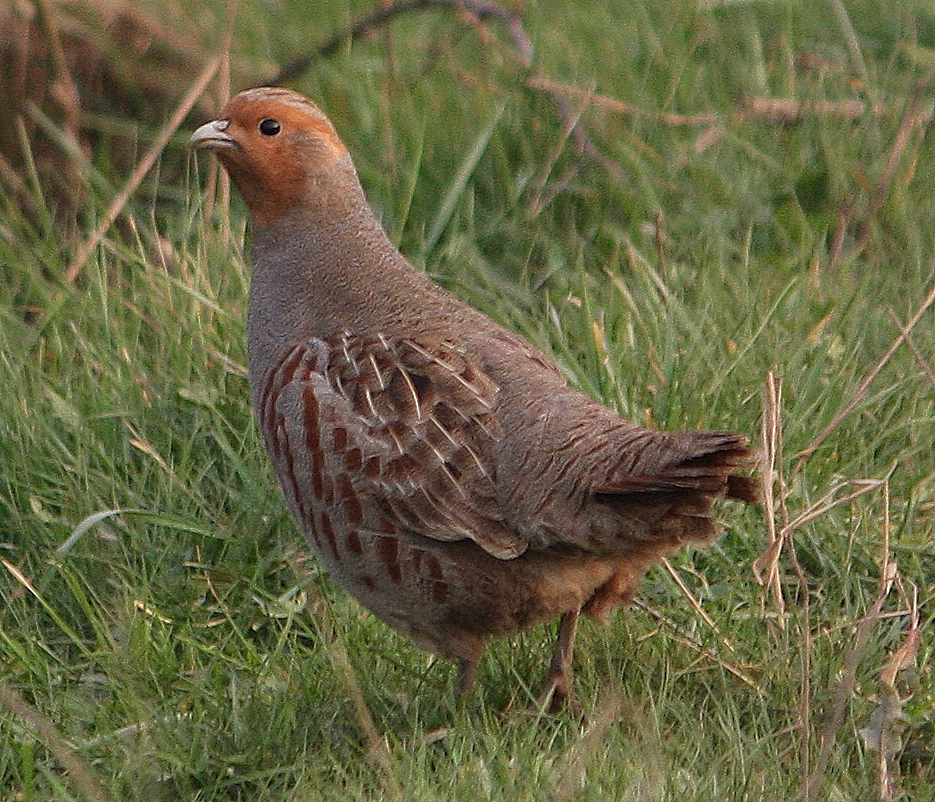
Birds which are reliant on farmed landscapes are continuing to decline dramatically, and the Turtle Dove (TD) and Grey Partridge (GP) are displaying alarming reductions in their numbers. Once widespread particularly in southern Britain, the TD population is hanging on a thread in the UK, with almost 60% lost in the five years to 2010. The loss of six out of ten TD's, and three out of ten GP's over the same period is surely nothing short of a wildlife disaster. The TD is in serious danger of becoming a population of fewer than 1,000 pairs by the middle of the next decade, leading to the distinct possibility of complete extinction.

Grey Partridge Geoff Gradwell


The UK population of Grey Partridge has been estimated at around 43,000 pairs, but this has also fallen by 30% over the same period as that of the TD. One farmer has claimed....with funding for wildlife-friendly farming, increases of Grey Partridge numbers have been noticed, but most noticeable this summer has been up to eight Turtle Doves compared to just one bird. But this farmer goes on to say....with species like the TD and GP in such rapid decline it is of concern that the reform of the Common Agricultural Policy may not ensure funding continues and is enhanced to help the farmer to help his farm wildlife.     

Grey Partridge Geoff Gradwell 


Nine juvenile Grey Partridge of the twelve along with two adults GG saw in July 2011. I can't help but feel these arrived in the UK in cages labelled 'imports' but I wish I could be proved wrong by someone.

Many thanks for the photographs Geoff....A rare sighting of a bird almost a rarity, and therefore rare and excellent images....

Iv'e never seen a Turtle Dove in my life....birding or not birding!

Sunday, 23 December 2012

Merry Christmas To The Faithful.

It's important to me that I wish all the faithful followers of Birds2blog a Very Happy Christmas and Good Wishes for the New Year. Providing I can maintain the blog, I hope you will continue to follow it in 2013, and that you enjoy the birds as much as I do, in trying to find where they all are, what they are doing there, and when they are there, to build a picture of how they are faring and - in many cases - failing.

For my part this holiday week will put a dampener on the whole birding scene, though if the weather forecasters are anything to go by it looks like 'dampener' is going to be the operative word. So at the very earliest it will be Friday before I get any realistic chance, but worse still it could be more than a week away....who knows. Meanwhile, whether or not I can come up with any 'gap in my birding fillers' for Birds2blog remains to be seen.

But here are a couple of images to put us on for a few days until things get back to something like normal, but not birds your likely to be seeing soon in the UK I don't think....

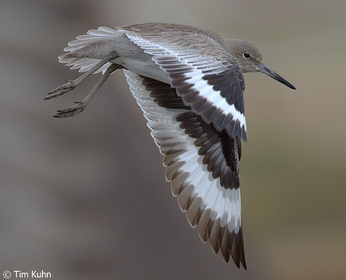
Willet Tim Kuhn


The Willet is the largest of the N.American 'shanks' its closest relative being the Lesser Yellowlegs.

Clark's Grebe Tim Kuhn

Another N.American bird the Clark's Grebe, until the 1980's was thought to be a pale morph of the Western Grebe which it resembles in size, range, and behaviour. The bird is named in honour of John Henry Clark, a 19th century surveyor who was a naturalist.

And finally....

If you'd like your Christmas to begin with a smile I'd suggest you 'clik the pik' below....its much better if you have the sound on.


Merry Christmas

Click on Santa

for a Message to you from Santa.